

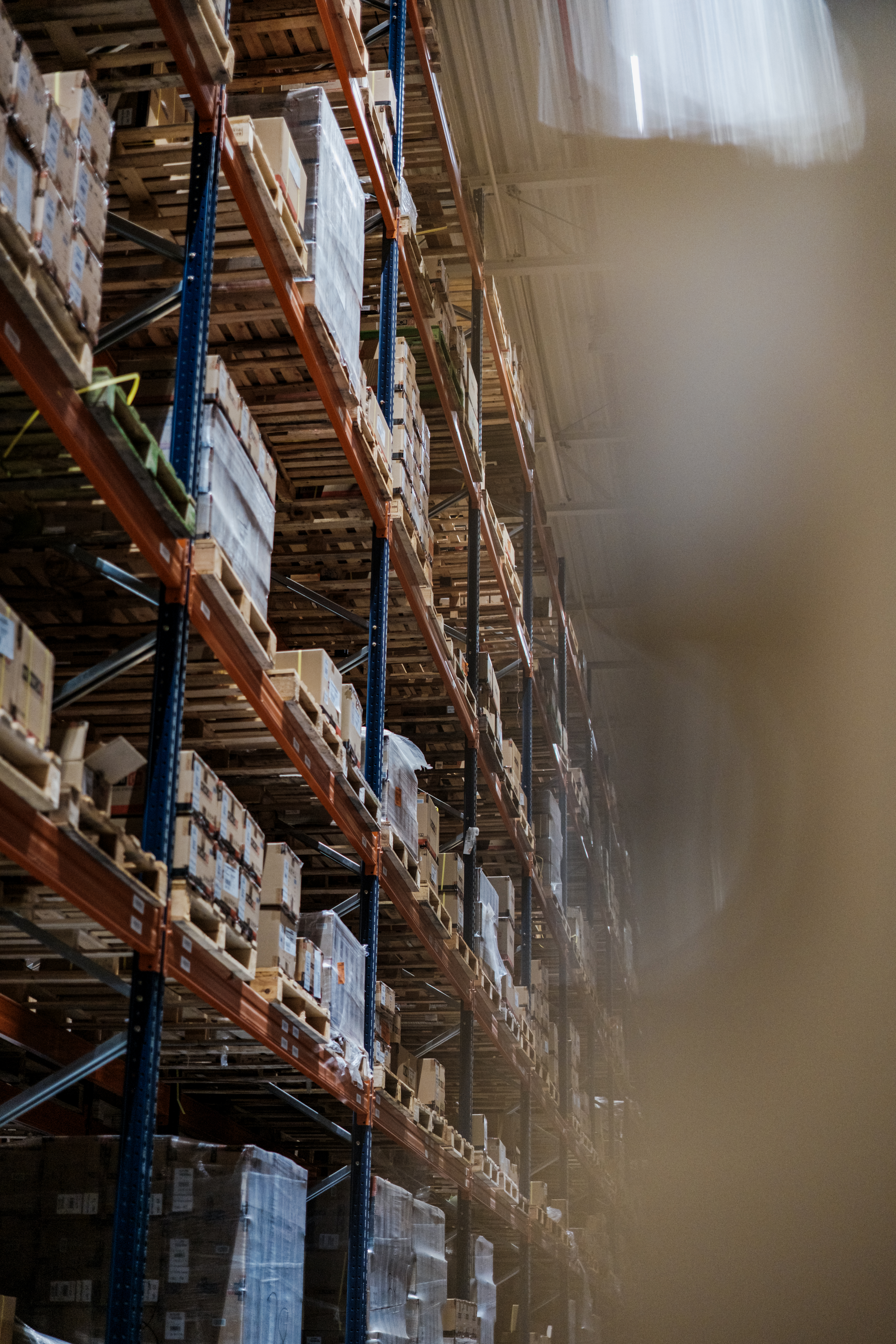
What is bonded storage?
Bonded storage – or a customs warehouse – is a specialized storage location where goods from outside the EU can be stored under customs supervision. The main advantage? You do not pay any import duties or VAT as long as the goods remain in storage. Taxes are only levied once the goods are released onto the EU market.
If the goods are later re-exported to a country outside the EU, the import duties are waived entirely. In this way, bonded storage offers businesses flexibility, security, and financial benefits.
Why choose bonded storage?
Bonded storage is particularly interesting for companies operating internationally and importing goods from different continents. It prevents you from having to pay import duties immediately and gives you more time to make decisions regarding distribution and sales.
Additionally, you reduce the risk of double taxation when transshipping to countries outside the EU. This makes bonded warehouses ideal as central hubs for international supply chains.
Want to know more about logistics outsourcing and scalability? Read our article on 3PL.
How does a customs warehouse work in the Netherlands?
In the Netherlands, customs warehouses are a widely used tool in international trade. Companies store their goods here temporarily, often near major logistical hubs such as the Port of Rotterdam or Schiphol Airport.
Customs maintains supervision, but companies are often allowed to repack, label, or process the goods as long as their essential nature does not change. This ensures they are quickly ready for distribution as soon as they enter the EU market or are re-exported.
An AEO-certified partner like Van der Helm offers extra advantages: faster inspections, fewer risks, and predictable handling.
Want to know how specialists handle this in practice? Read more: what does a customs broker do.
Benefits of bonded storage in practice
The benefits of bonded storage are both financial and operational:
- Cash flow advantage: you defer the payment of import duties and VAT.
- Flexibility: goods can be stored longer under customs supervision.
- Efficiency: transit to countries outside the EU is faster and more cost-effective.
- Strategic storage: ideal for companies serving multiple markets.
Pressure on logistics is increasing. Consider the growth of container volumes in Rotterdam: more goods also means a greater need for smart storage solutions.
Safety and reliability
Bonded storage requires trust and strict compliance with regulations. Innovations such as the Trust Chain in container logistics help make processes safer and more transparent. This applies not only to container transport but also to the storage and transfer of goods.
Global events can also impact flow. The Suez Canal blockage demonstrated how quickly supply chains can come under pressure. Companies with bonded storage and flexible partners were better able to respond with alternatives.
Conclusion: bonded storage as a strategic asset
Bonded storage in the Netherlands offers companies flexibility, cost advantages, and security. By temporarily storing goods under customs supervision, you maintain control over your cash flow and prevent unnecessary delays or double taxation.
At Van der Helm, we combine bonded warehousing with our expertise in warehousing, transport, and customs clearance. This allows us to create an integrated solution that makes your supply chain reliable and future-proof.