

International logistics is currently under pressure due to exceptional geopolitical developments in the Middle East. This situation has direct consequences for both sea and air freight and may affect transit times, capacity, and costs within the global supply chain.
On February 28, 2026, the situation in the Middle East escalated following military actions between the United States, Israel, and Iran. As a result, major sea routes and airspace corridors in the region have been disrupted, leading to significant challenges for international transport flows.
Van der Helm is monitoring developments closely and is informing customers about the potential impact on their shipments.
Impact on maritime transport
Strait of Hormuz
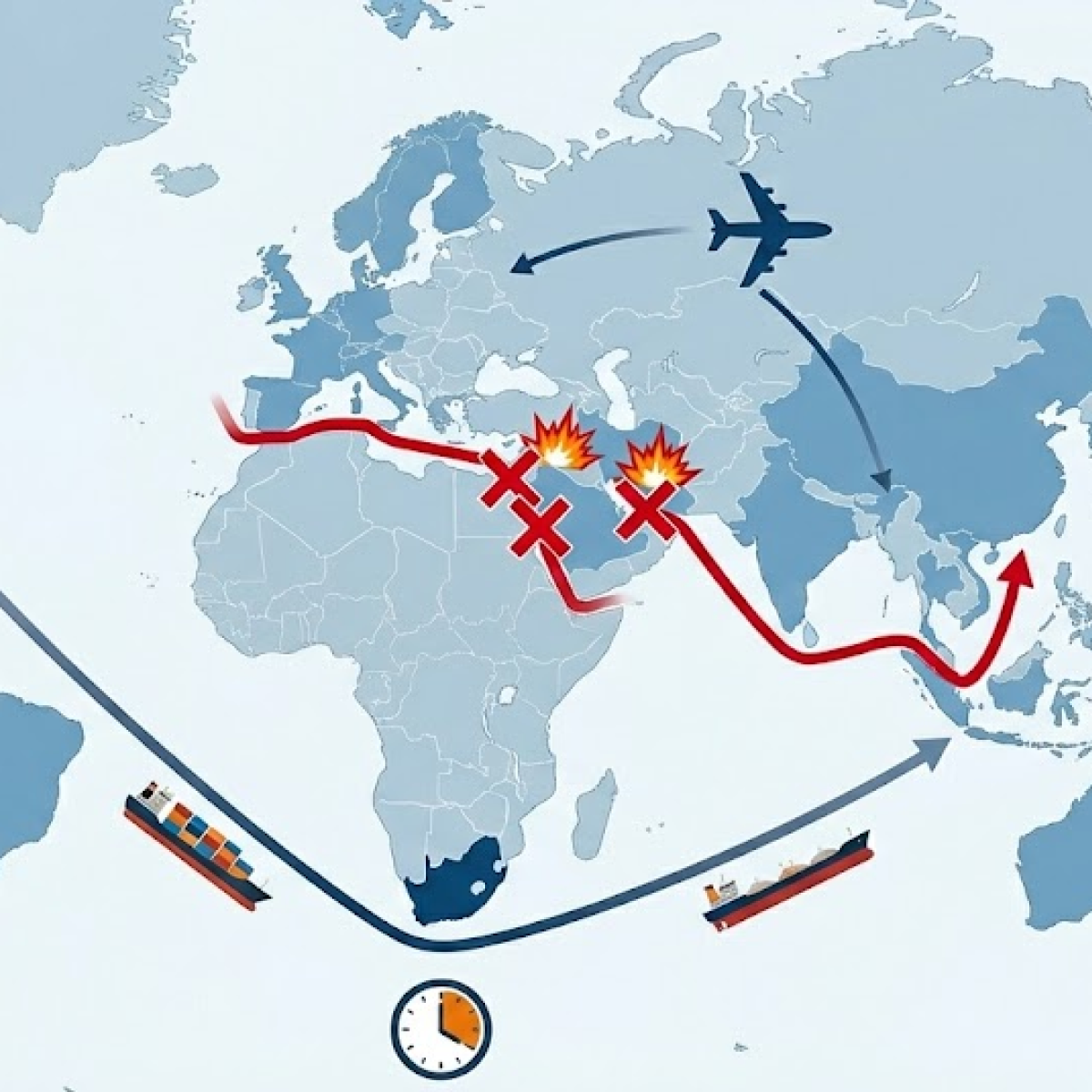
Maritime traffic through the Strait of Hormuz has currently come to a virtual standstill. Several container shipping lines have suspended all transits for security reasons.
As a result, ports in countries including the following are temporarily difficult or impossible to reach via usual maritime routes:
UAE (Jebel Ali, Abu Dhabi), Qatar (Hamad), Saudi Arabia (Dammam, Jubail), Kuwait, Bahrain, Oman, and Iraq (Umm Qasr).
Red Sea and Suez Canal
Due to renewed attacks on shipping in the Red Sea, shipping lines are once again avoiding the Suez Canal. Vessels are being diverted via the Cape of Good Hope, leading to longer transit times, pressure on available capacity, and higher operational costs.
In addition to the direct impact on maritime trade routes, we expect further disruptions in the coming period due to various factors. These include the withdrawal of maritime insurers for war risks in this region, an imbalance in available vessel capacity and containers, disruptions to sailing schedules, and longer routes due to diversions around the Cape of Good Hope. Furthermore, rising oil prices are leading to higher fuel consumption and increasing transport costs.
Decisions by shipping lines
Various carriers have now taken measures. These measures include the temporary suspension of calls to certain ports, End of Voyage declarations, the diversion of ships to safe ports, and the introduction of war, risk, and emergency surcharges.
These developments may have consequences for shipments to or via the Middle East. Possible effects include longer transit times, waiting times in ports, changes to discharge ports, container shortages, congestion in regional hubs, and additional costs passed on by shipping lines.
Impact on air freight
The consequences are also clearly visible within the air freight sector. In the past week alone, more than 6,700 delays and thousands of cancellations have been reported directly related to military activities in the region.
Major hubs in the Gulf region, such as Dubai, Doha, and Abu Dhabi, normally play a crucial role in global air freight connectivity. Now that the airspace over Iran and surrounding areas is considered unsafe, airlines are being forced to reroute flights via northern or southern corridors.
These diversions lead to longer flight paths and higher operational costs. At the same time, fuel costs are rising and several airlines have withdrawn BSA agreements. A number of Gulf carriers have also temporarily reduced or suspended their operations.
The combination of reduced capacity, longer routes, higher fuel costs, and a greater reliance on the spot market is currently creating clear upward pressure on air freight rates. Transit times may also increase, and capacity availability may be more limited than usual in the short term.
Contractual situation
Van der Helm acts as a freight forwarder in accordance with the Dutch Forwarding Conditions. Article 12 describes the forwarder’s obligations in the event of force majeure.
In the event of force majeure, obligations are suspended for the duration of the situation. Any additional costs arising from this, such as transport costs, storage costs, warehouse or site rent, demurrage, insurance, unloading, and other related costs, shall be borne by the client.
Van der Helm as your logistics partner
Van der Helm continues to monitor the situation closely and seeks alternative logistics solutions where possible. In doing so, we actively defend our customers’ interests in consultation with carriers and other parties involved in the supply chain.
The current situation can change rapidly. Routes, rates, and schedules may therefore be adjusted at short notice. We will, of course, keep customers informed of relevant developments regarding their shipments.
Do you have questions about specific shipments or would you like to explore alternative logistics solutions together? Please feel free to contact our team. Together, we will find the most appropriate solution under the current circumstances.