

The international logistics chain is facing challenges once again. More and more container shipping lines are resuming their routes via the Suez Canal, increasing pressure on European ports. At the same time, ongoing labor unrest in Bangladesh is causing production stops and factory closures in the garment industry.
Both developments could have consequences for the availability of goods, sailing schedules, and delivery times to Europe. We have summarized the most important developments and potential consequences for your shipments.
Return via the Suez Canal increases pressure on European ports
After a long period in which many container shipping lines sailed via the Cape of Good Hope, more and more shipping services are returning to the shorter route via the Suez Canal. Major carriers such as MSC, Maersk, Hapag-Lloyd, and CMA CGM are now using this route again on various connections.
The return offers advantages for international sea freight. Ships sailing from the Far East via the Suez Canal to Northern Europe can reach their destination approximately 10 to 14 days earlier than via the Cape of Good Hope.
In the long term, this can lead to shorter transit times and more efficient ship deployment. In the short term, however, a new challenge is emerging for European ports.
Simultaneous arrival of container ships
Because shipping lines are switching to the shorter route, ships sailing via the Suez Canal may arrive almost simultaneously with ships that departed earlier via the Cape of Good Hope.
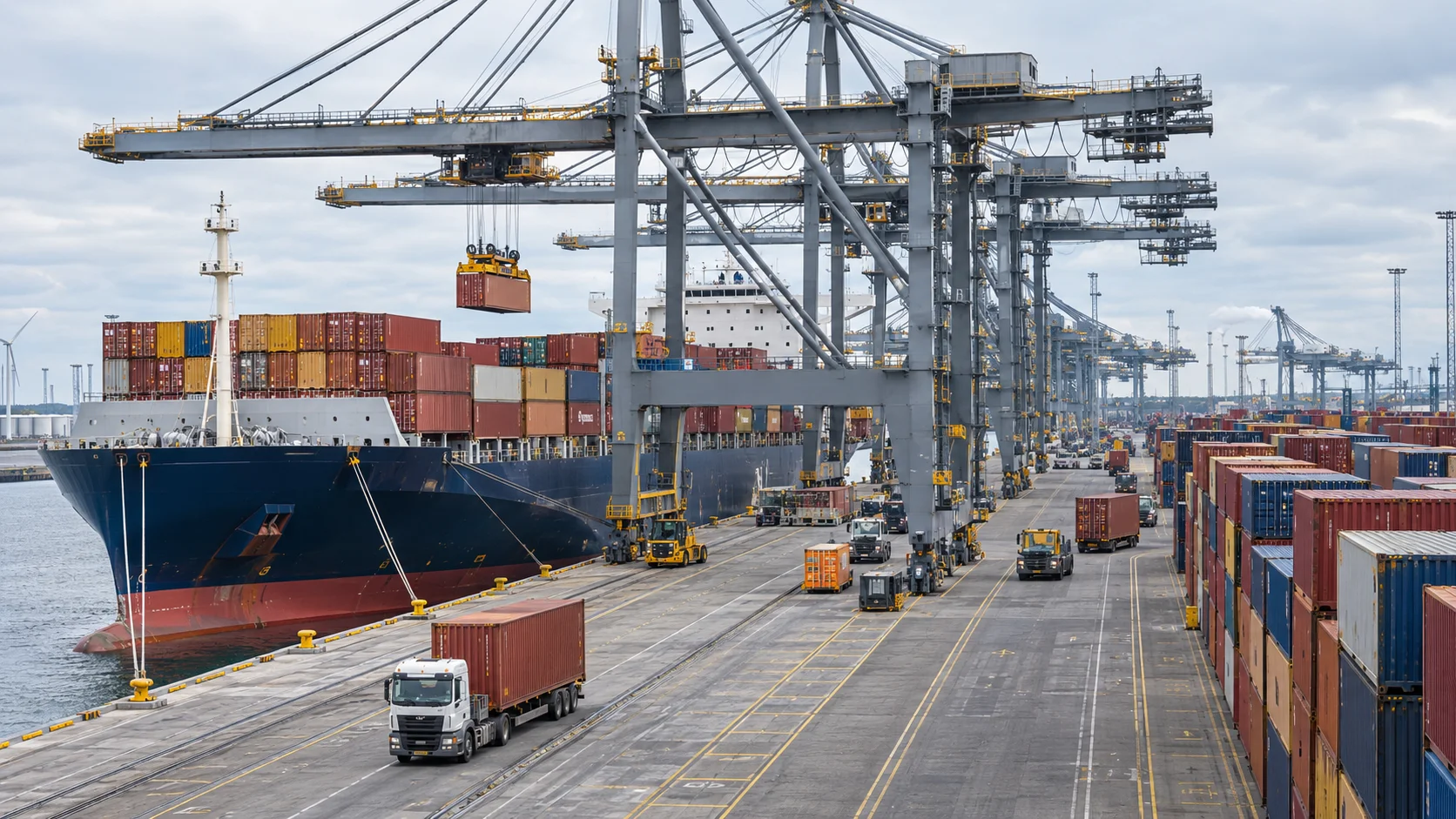
As a result, container terminals must process larger quantities of containers in a short period. Especially in the ports of Rotterdam, Antwerp, and Hamburg, this can lead to extra pressure on available terminal capacity.
The possible consequences are:
- Less reliable estimated times of arrival (ETAs) and changes in sailing schedules.
- Longer waiting times at container terminals and delays in unloading ships.
- Delays in the release and collection of containers.
- Limited availability of trucks, inland shipping, and rail transport for onward transport.
The increased pressure is already noticeable in November and may continue over the coming months, possibly into the first quarter of 2027.
For companies dependent on international forwarding, it is therefore important to take potential changes in arrival and delivery times into account.
Which route are shipping lines using for your shipment?
Although more and more shipping lines are returning to the Suez Canal, connections via the Cape of Good Hope also remain available. Which route is used depends on the shipping line, the specific service, and current conditions.
At Van der Helm Logistics, we take these developments into account when organizing sea freight shipments.
Would you prefer not to use the route via the Suez Canal for your goods? Then we advise you to indicate this in advance so that we can look at the available alternatives together.
Labor unrest in Bangladesh causes production stops
In addition to developments within the sea freight sector, the garment industry in Bangladesh is also dealing with disruptions.
In several key production areas, including Ashulia, Savar, and Gazipur, ongoing protests and labor unrest are causing problems at garment factories.
According to the Bangladesh Garment Manufacturers and Exporters Association (BGMEA), production was halted at 147 garment factories on November 14, 2026. Of these, 55 factories were closed based on Section 13(1) of the Bangladesh Labour Act 2006.
The unrest is partly related to discussions about minimum wages and working conditions. Due to ongoing protests and security issues, several factories cannot continue their production as planned.
Possible consequences for importers and retailers
Bangladesh is a major production location for the international garment industry. Production disruptions can therefore directly affect the flow of goods to Europe.
For importers, clothing brands, and retailers, the consequences may include:
- Delays in the production and completion of existing orders.
- Goods becoming available for shipment later.
- Missing scheduled departures of container ships.
- Longer delivery times to European distribution centers and stores.
When goods are not ready on time, this can affect the entire logistics planning. A delayed production order can mean, for example, that a container can only be taken on a subsequent sailing.
As long as the situation in Bangladesh does not stabilize, the risk of additional production and delivery delays remains present.
What do these developments mean for your shipments?
Although the causes differ, both developments can affect the reliability of international goods flows.
In Bangladesh, the main risk lies in the production and availability of goods. With the return via the Suez Canal, potential delays occur specifically during arrival and further handling in European ports.
For companies importing goods from Asia, these factors can reinforce each other. When a production order is completed later and the container subsequently arrives at a busy European port, the total lead time can increase further.
It is therefore wise to maintain sufficient flexibility in planning and to coordinate important delivery times with suppliers and logistics partners in a timely manner.
Van der Helm Logistics monitors developments
At Van der Helm Logistics, we closely monitor the situation with international shipping lines, European container terminals, and our local partners.
Where possible, we tailor our sea freight and transport solutions to current conditions. In doing so, we look at available shipping routes, expected arrival times, and options for onward transport.
We advise companies to take potential delays into account for future shipments and to discuss alternatives in a timely manner when delivery times are critical.
As soon as there are significant new developments that could affect international shipments, we will inform you.