

National handling fee for e-commerce: more control, a fairer playing field, and better flow
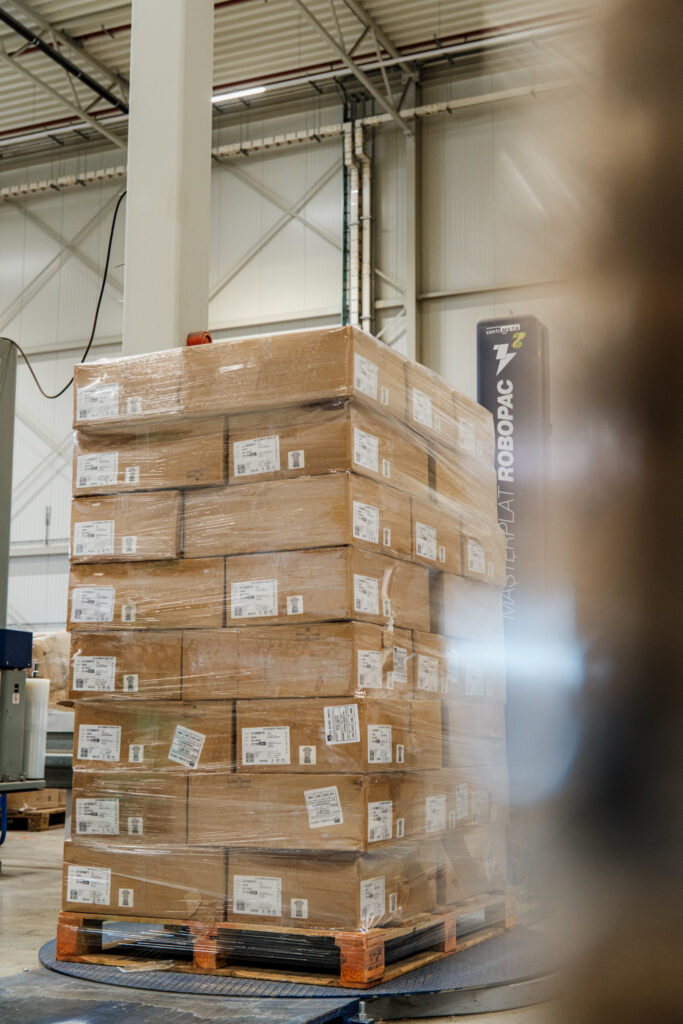
Customs is preparing for the possible introduction of a national handling fee for e-commerce shipments from outside the EU. A development that at first glance raises questions, but mainly offers opportunities for a fairer, more transparent, and future-proof e-commerce landscape. More oversight, fewer disruptions in the chain The handling fee is intended to better control the sharply increased flow of e-commerce shipments. This fee allows Customs to invest in extra capacity, modern scanning techniques, and smart applications such as AI. This ensures faster and more targeted checks, fewer delays, and a more reliable flow of goods. For e-commerce companies, this means more predictability in the supply chain and fewer surprises during customs clearance. Especially in a market where speed and reliability make the difference, this is an important advantage. Fair playing field for European entrepreneurs The handling fee applies to e-commerce shipments with a value below €150 that are delivered directly to consumers in the EU from countries outside the EU. This allows Customs to address structural bottlenecks, such as incorrect customs values and products that do not comply with European regulations. This prevents unfair competition and protects entrepreneurs who do have their logistics and compliance in order. The result is a more level playing field in which quality, service, and reliability are once again leading. Clarity and simplicity in implementation The fee is €2 per declaration line and is invoiced monthly in arrears. No additional security needs to be provided, and the handling fee is not included in the customs value. Also, no VAT is charged on it. This keeps the scheme clear and manageable for companies that process large volumes daily. Step towards European harmonization The national handling fee is a temporary measure in the run-up to the European handling fee, which is expected to be introduced in November 2026. Once this European regulation is in force, the national variant will lapse. This means that companies are preparing for one uniform approach within Europe, which in the long term will ensure more peace and consistency in international e-commerce logistics. What does this mean for your logistics? For growing e-commerce companies, now is the time to further professionalize processes related to declaration, data quality, and fulfillment. With the right logistics partner, you ensure that declarations are correct, costs remain transparent, and your customers continue to benefit from fast and reliable deliveries. At Van der Helm Logistics, we are happy to help you with this. With our experience in international e-commerce logistics, customs processes, and scalable fulfillment solutions, we help you to be prepared for these and future changes. Want to know more about how we make your e-commerce logistics future-proof? Check out our solutions for e-fulfilment.
Asian holidays Q1 2026: what do they mean for your supply chain?
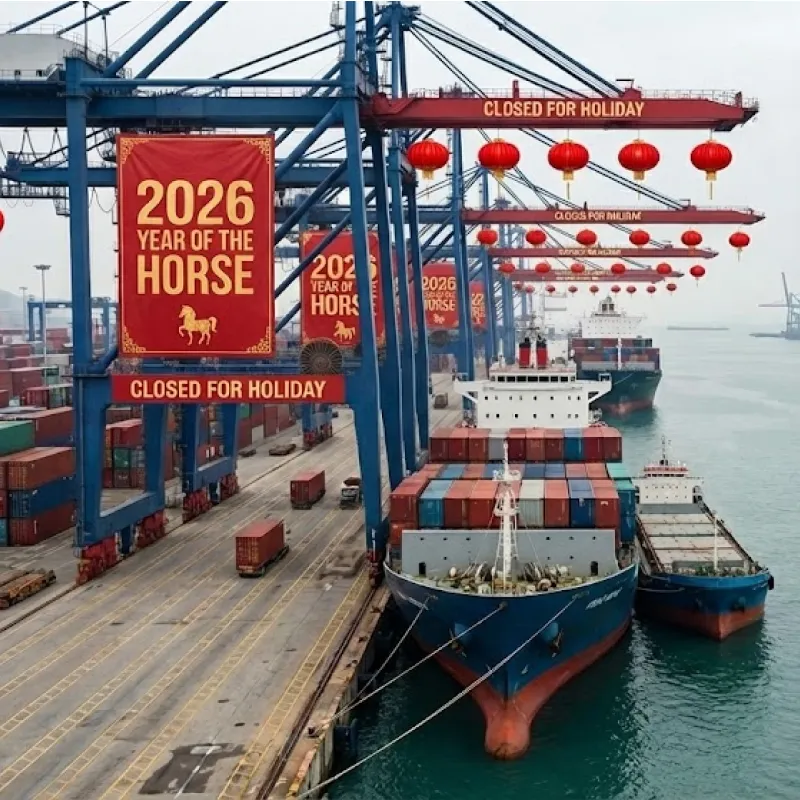
The first quarter of 2026 has several important Asian holidays that directly impact production, capacity, and delivery times. In particular, the Chinese New Year in February causes a temporary standstill in large parts of Asia. In this article, we list the most important dates and show what this means for your supply chain and logistics planning.
Council of State critical of national handling fee for e-commerce shipments
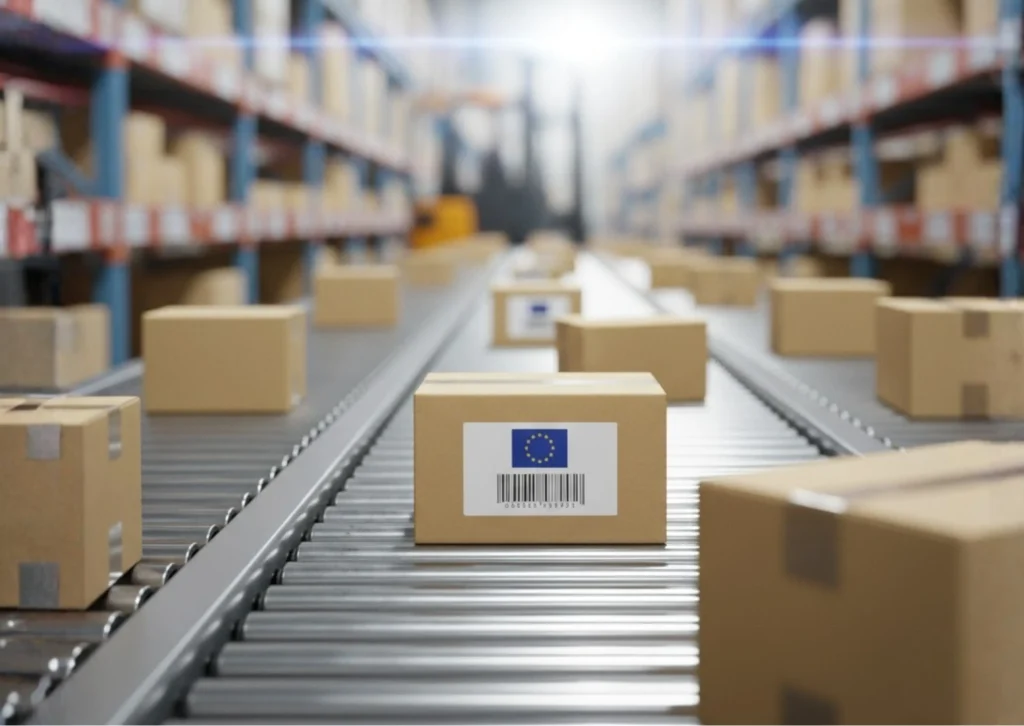
On December 22, 2025, the advisory report from the Advisory Division of the Council of State was published regarding the proposal to introduce a national handling fee for e-commerce shipments from outside the European Union. The advice was prepared on December 17, 2025, and addresses the legal, practical, and financial consequences of this measure. Background of the proposal The government wants to introduce a national handling fee of €2 per declaration line through an amendment to the General Customs Decree. This fee would apply to e-commerce shipments with a value up to €150 that are imported from outside the EU. A declaration line consists of a goods code. Therefore, when a package contains multiple products, multiple lines may apply. With this national measure, the Netherlands is anticipating a possible European handling fee that is expected to be introduced by the end of 2026. The Netherlands only wants to introduce the fee if France and Belgium also have a similar national scheme. The government wants to prevent e-commerce shipments from moving to the Netherlands, which would put extra pressure on Dutch Customs. Urgent problem, but caveats regarding the solution The Advisory Division acknowledges that the enormous increase in individual e-commerce shipments poses an urgent problem for Customs. Especially when other member states introduce a national fee, it may be necessary to take measures to prevent a waterbed effect. At the same time, the Division emphasizes that national measures cannot be seen in isolation from developments at the European level. For example, it was recently agreed that the current exemption for levying import duties on shipments up to €150 will be abolished. This change may significantly influence the nature and extent of e-commerce flows and, therefore, the necessity of a national handling fee. Legal vulnerability and financial risks According to the Advisory Division, the proposed national handling fee is legally vulnerable. The measure conflicts with existing European and national customs legislation and with international trade agreements. This creates a risk of legal proceedings, which in the most extreme case could lead to the fee having to be (partially) refunded. This also brings budgetary uncertainties. In addition, the Division states that the substantiation of the fee amount is insufficiently transparent. In order to be allowed to levy a handling fee as a cost reimbursement, it must be clear that it approximates the actual costs as closely as possible. The current explanation does not seem to take sufficient account of existing controls, European perception costs, and the effects of the expiry of the import duty exemption. Tight schedule The proposed schedule also raises questions. Both for the legal embedding and for the implementation by Customs and by parties submitting declarations, the available preparation time is very limited. This increases the chance of implementation problems in practice. Advice: hold your horses first Although the Advisory Division understands the problems, it advises the government not to introduce a national handling fee for the time being. First, it should become clear what the consequences are of abolishing the import duty exemption within the EU. Only then can it be assessed whether a national measure is necessary, legally sustainable, and feasible. The advice to the government is therefore not to take the decision unless it is amended on these points. The full advice of the Advisory Division can be read via the website of the Council of State. Want to know more about how we at Van der Helm Logistics deal with changes in customs legislation and international e-commerce? Read more about our expertise in the field of customs and e-commerce logistics.
New laws and regulations regarding temporary workers from 2026: what does this mean for transport and logistics?
From January 1, 2026, much will change regarding working with temporary employees. The new NBBU collective labor agreement for Temporary Workers and additional legislative amendments have a direct impact on employment conditions, costs and responsibilities. Especially within transport and logistics, where flexibility and personnel planning come together on a daily basis, it is important to be well prepared. In this article, we explain what is changing, what you as a logistics company need to take into account and how these developments affect the sector. New collective labor agreement for temporary workers: equivalent employment conditions as a starting point The core of the new collective labor agreement is the transition to fully equivalent employment conditions. From 2026, temporary workers will be entitled to an employment conditions package that is equal in value to that of employees who are directly employed by the client, in a comparable position. This goes beyond just the hourly wage. Allowances for irregular hours, leave arrangements, pension accrual, training and other employment conditions also count towards the total valuation. For logistics organizations, where work is often done in shifts, night shifts and peak loads, this requires a careful comparison and clear agreements with temporary employment partners. The traditional client fee disappears. Instead, it is about the overall picture, where equivalent does not necessarily have to be identical, but demonstrably comparable in value. Changes that have a direct impact on daily practice In addition to the new collective labor agreement, there are several legislative amendments that together change the playing field for transport and logistics companies. The statutory minimum wage will increase to €14.71 per hour for employees aged 21 and over on January 1, 2026. The minimum youth wages will also be increased. This has a direct impact on wage costs, rates and contract agreements. For companies that work with labor migrants, the calculation tool for calculating housing costs (PKS) will also change. The maximum amounts that may be deducted will be adjusted, which will affect existing agreements regarding housing and compensation. The wage cost benefit for older employees will lapse for employment contracts that started on or after January 1, 2024. At the same time, the wage cost benefit job agreement will become structural, which offers opportunities for employers who employ people from the target group register. In addition, the enforcement of bogus self-employment will be tightened. The leniency period is coming to an end, which means that clients and chain partners bear more responsibility for the correct organization of employment relationships. This requires extra attention when deploying self-employed persons and flexible workers. What does this mean specifically for transport and logistics? For logistics companies, this development mainly means that transparency and cooperation are becoming even more important. Flexible deployment remains possible, but requires up-to-date knowledge of laws and regulations and clear agreements with temporary employment agencies and other partners. It is also realistic to take into account an increase in wage costs, because employment conditions from 2026 must be equivalent in value to those of permanent staff. At the same time, the changes provide more clarity and equality in the workplace. This contributes to the sustainable employability of personnel and to stability within teams, something that is becoming increasingly important in a sector with structural shortages. Anyone who looks ahead sees that good employment practices, correct remuneration and clear processes are becoming increasingly decisive for continuity and quality in the logistics chain. Investing in people and in clear agreements pays off, especially in a market where reliability and delivery reliability make the difference. Prepared for the future At Van der Helm Logistics we closely monitor developments in laws and regulations. We believe it is important to look ahead and adjust our processes in a timely manner, so that our customers can continue to count on reliable logistics, even when the playing field changes. Thanks to our experience in transport, warehousing and personnel planning, we know what these changes mean in practice. In this way, we work together to ensure continuity, clarity and control over logistics processes, today and in the future. Want to know more about how we deal with changes in laws and regulations within our logistics services? Read more about our approach in the field of warehousing.
Postponement of national handling fee introduction for e-commerce shipments
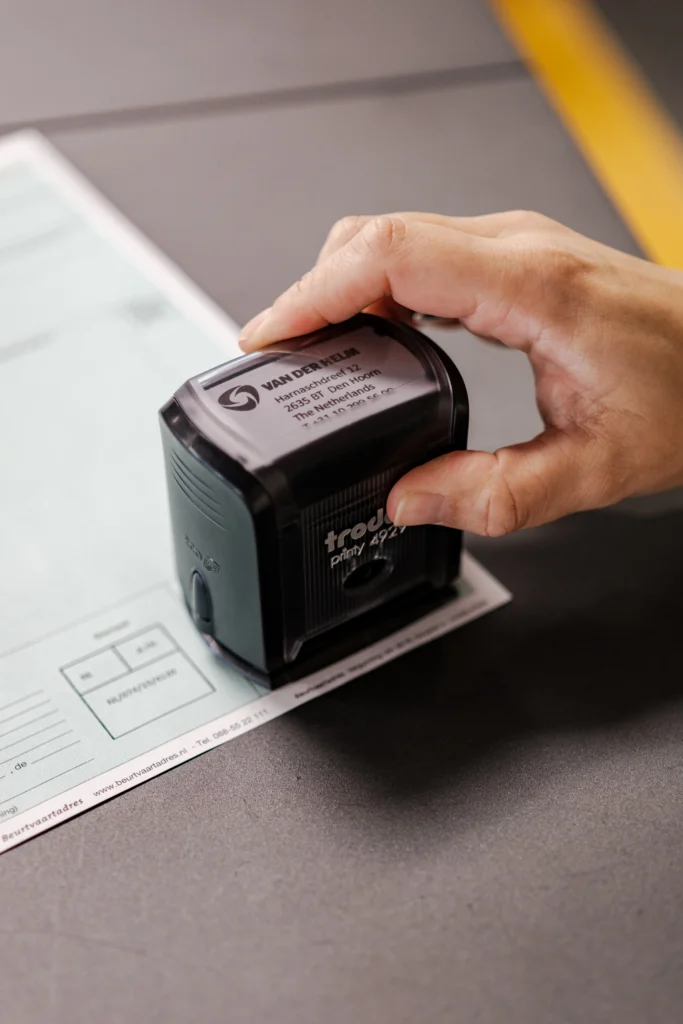
The Netherlands has made an important decision regarding the introduction of the national handling fee for e-commerce shipments. The State Secretary for Fiscal Affairs, Tax Administration and Customs has announced that the introduction of this fee, which is intended to cover the additional costs incurred by Customs in checking e-commerce shipments, will not take place before February 1, 2026. This decision was communicated to the House of Representatives today via an official letter. The national handling fee is being introduced to cover the rising costs of Customs due to the increase in e-commerce shipments. Although the European Union will introduce a uniform handling fee for the entire EU in November 2026, some neighboring countries are considering introducing a national version of this fee as early as the beginning of 2026. To prevent logistics in the Netherlands from becoming congested, Customs is preparing for a possible introduction, but only in line with other EU member states. The Netherlands is in close consultation with other EU countries to ensure a joint implementation date and to prevent a waterbed effect. Because it is still uncertain whether other member states will introduce their national handling fee as early as January 1, 2026, there was a short period between the announcement and the expected implementation. With the decision not to introduce the measure before February 1, 2026, the State Secretary wants to give the sector sufficient time and clarity to prepare. For more information, please visit the information page about the handling fee on Douane.nl. If you have any direct questions, our colleagues in the customs department can also help you.
December logistics update — Navigating holiday demand and upcoming EU changes
Dear partner, The coming months bring important changes for international supply chains, all while the December peak season is in full swing. As holiday demand pushing logistics networks to their limits, it’s more important than ever to stay ahead of regulatory shifts. In this update, we explain what the EUDR will mean for your sourcing, we outline France’s decision to end limited fiscal representation under Regime 42, and share how our customs team is preparing for the future. The EU Deforestation Regulation (EUDR) will take effect on 30 December 2025 We would like to inform you about new EU legislation that will affect the import and export of certain commodities: the EU Deforestation Regulation (EUDR – Regulation (EU) 2023/1115).The EU Deforestation Regulation (EUDR) will take effect on 30 December 2025, introducing strict requirements to ensure that key commodities and products are proven deforestation-free. Larger companies must comply from day one, while smaller businesses may receive extended timelines. In our blog, we break down what this means for your sourcing and supply chain. Curious how to prepare in time? Learn more about EUDR Regime 42 for non-EU companies From 1 January 2026, France will abolish limited fiscal representation under Regime 42 for non-EU companies, eliminating the option to defer import VAT. This change may increase administrative requirements and affect cash flow for businesses importing into France. The Netherlands will continue to offer this arrangement, providing a more favourable alternative for VAT handling. Companies relying on Regime 42 should review their EU entry strategy and prepare for the shift. Get in touch with your account manager Team update On 11 November, our customs team completed an export training, ensuring we stay fully up to date and future-ready. Fulfillment Centres in E-Commerce Logistics A fulfillment center is a specialized facility that stores your inventory, and from there handles the full order flow: receiving, picking, packing, shipping, and even returns. In our blog we explain how such a centre simplifies logistics and lets you focus on growing your business instead of managing warehousing. Curious what that means for your operations and scalability? Learn more about E-commerce logistics Happy Holidays from Van der Helm We also want to wish everyone a warm and joyful holiday season, while we work hard this month to ensure all logistics run smoothly and every delivery arrives on time.
New Combined Nomenclature 2026: What the Changes Mean for Your Imports and Exports

The European Commission has published the new Combined Nomenclature for 2026. This annual update determines the tariff and statistical codes used for customs declarations, import duties, excise duties, VAT, and Intrastat. The new classification will be mandatory from January 1, 2026. At Van der Helm, we closely monitor these changes, as correct product classification forms the basis for a smooth international flow of goods. In the CN 2026, various adjustments have been made to better align the classification with technological developments and trade within the EU. The main changes are: These changes can directly impact your customs processes. It’s important to check if your existing product classifications are still correct under the new CN 2026. By assessing which codes are changing in a timely manner, you prevent delays, additional costs, and errors in declarations. Our team is happy to review this with you and support you in implementing the correct changes, ensuring your goods flow continues without interruption. If you want to know more about our services in customs and forwarding, please check the information on customs or forwarding.
EU Abolishes €150 Exemption Threshold for E-Commerce: What Does this Mean for your Cross-Border Strategy?
The European Union confirms a significant change in customs policy for e-commerce. From 2026, the €150 exemption for customs duties will be removed. This means that even small orders may incur customs duties. At the same time, a mandatory handling fee of two euros per package will be introduced for all distance sales from outside the EU, even when the value is less than €150. Why the EU is taking this stepThe changes stem from the massive growth of low-value shipments that were often deliberately undervalued. This led to unfair competition for European retailers and made the customs system increasingly difficult to control. The EU aims to create a more transparent system where every shipment is correctly valued and treated fairly. What exactly changes from 2026From 2026, much will change for companies selling to EU consumers. Every package from a non-EU country will be subject to customs rules, regardless of value. The handling fee of two euros per package applies to every distance sale from outside the EU. This makes the impact directly felt for webshops that send many small orders.The abolition of the exemption means that low-value orders will more often incur customs duties. The likelihood of additional costs and complexity increases for both senders and recipients. New responsibilities for e-commerce platformsE-commerce platforms are increasingly being designated as the deemed importer. They must collect VAT and customs duties at checkout and remit them to the European authorities. This requires clear valuations, correct documentation, and accurate processes both on the webshop side and in the logistics chain. Impact on non-EU sellers and UK webshopsFor companies outside the EU, including many UK webshops, the administrative burden increases further. The total cost per shipment rises, and obligations around VAT registration and customs declarations become more intensive. Companies that cannot pass on these costs experience pressure on their margins.The changes affect not only sellers but also consumers, marketplaces, and logistics service providers. Accuracy and insight become more important than ever. The chain must prepare for a new customs landscapeThe new rules impact the entire supply chain. Consumers will more frequently encounter customs charges. Logistics parties, brokers, and marketplaces must tighten processes and provide documentation carefully. A well-coordinated logistics flow and correct value declaration become crucial. 2026 is just around the cornerFor cross-border e-commerce companies, this is the time to look ahead and revise the logistics strategy. Those who anticipate in time can avoid delays, unexpected costs, and uncertainty towards customers. Van der Helm helps companies maintain controlVan der Helm closely follows these developments. With our experience in international logistics and customs processes, we support organizations that want to be prepared for the new European customs rules.Together, we ensure a solution that fits your growth and the way your organization operates. How do we do this? Get in touch with our team and we’ll be happy to explain.
EU Deforestation Regulation (EUDR) effective from 30 December 2025

Are you an importer of EUDR goods (cocoa, coffee, palm oil, rubber, soy, cattle, or wood)? Expect due diligence obligations and read this email carefully.
November logistics update — Schiphol’s digital leap, TLN warning & CBAM reminder
Digital transformation at Schiphol, new compliance rules, and TLN’s call for action.