

Council of State critical of national handling fee for e-commerce shipments
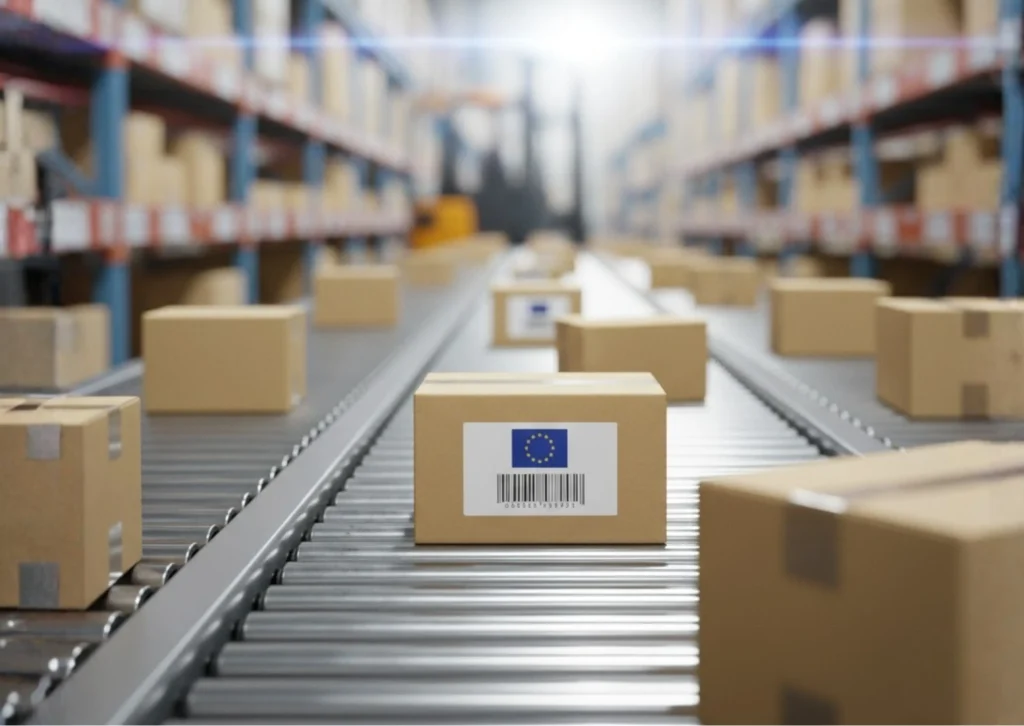
On December 22, 2025, the advisory report from the Advisory Division of the Council of State was published regarding the proposal to introduce a national handling fee for e-commerce shipments from outside the European Union. The advice was prepared on December 17, 2025, and addresses the legal, practical, and financial consequences of this measure. Background of the proposal The government wants to introduce a national handling fee of €2 per declaration line through an amendment to the General Customs Decree. This fee would apply to e-commerce shipments with a value up to €150 that are imported from outside the EU. A declaration line consists of a goods code. Therefore, when a package contains multiple products, multiple lines may apply. With this national measure, the Netherlands is anticipating a possible European handling fee that is expected to be introduced by the end of 2026. The Netherlands only wants to introduce the fee if France and Belgium also have a similar national scheme. The government wants to prevent e-commerce shipments from moving to the Netherlands, which would put extra pressure on Dutch Customs. Urgent problem, but caveats regarding the solution The Advisory Division acknowledges that the enormous increase in individual e-commerce shipments poses an urgent problem for Customs. Especially when other member states introduce a national fee, it may be necessary to take measures to prevent a waterbed effect. At the same time, the Division emphasizes that national measures cannot be seen in isolation from developments at the European level. For example, it was recently agreed that the current exemption for levying import duties on shipments up to €150 will be abolished. This change may significantly influence the nature and extent of e-commerce flows and, therefore, the necessity of a national handling fee. Legal vulnerability and financial risks According to the Advisory Division, the proposed national handling fee is legally vulnerable. The measure conflicts with existing European and national customs legislation and with international trade agreements. This creates a risk of legal proceedings, which in the most extreme case could lead to the fee having to be (partially) refunded. This also brings budgetary uncertainties. In addition, the Division states that the substantiation of the fee amount is insufficiently transparent. In order to be allowed to levy a handling fee as a cost reimbursement, it must be clear that it approximates the actual costs as closely as possible. The current explanation does not seem to take sufficient account of existing controls, European perception costs, and the effects of the expiry of the import duty exemption. Tight schedule The proposed schedule also raises questions. Both for the legal embedding and for the implementation by Customs and by parties submitting declarations, the available preparation time is very limited. This increases the chance of implementation problems in practice. Advice: hold your horses first Although the Advisory Division understands the problems, it advises the government not to introduce a national handling fee for the time being. First, it should become clear what the consequences are of abolishing the import duty exemption within the EU. Only then can it be assessed whether a national measure is necessary, legally sustainable, and feasible. The advice to the government is therefore not to take the decision unless it is amended on these points. The full advice of the Advisory Division can be read via the website of the Council of State. Want to know more about how we at Van der Helm Logistics deal with changes in customs legislation and international e-commerce? Read more about our expertise in the field of customs and e-commerce logistics.
December logistics update — Navigating holiday demand and upcoming EU changes
Dear partner, The coming months bring important changes for international supply chains, all while the December peak season is in full swing. As holiday demand pushing logistics networks to their limits, it’s more important than ever to stay ahead of regulatory shifts. In this update, we explain what the EUDR will mean for your sourcing, we outline France’s decision to end limited fiscal representation under Regime 42, and share how our customs team is preparing for the future. The EU Deforestation Regulation (EUDR) will take effect on 30 December 2025 We would like to inform you about new EU legislation that will affect the import and export of certain commodities: the EU Deforestation Regulation (EUDR – Regulation (EU) 2023/1115).The EU Deforestation Regulation (EUDR) will take effect on 30 December 2025, introducing strict requirements to ensure that key commodities and products are proven deforestation-free. Larger companies must comply from day one, while smaller businesses may receive extended timelines. In our blog, we break down what this means for your sourcing and supply chain. Curious how to prepare in time? Learn more about EUDR Regime 42 for non-EU companies From 1 January 2026, France will abolish limited fiscal representation under Regime 42 for non-EU companies, eliminating the option to defer import VAT. This change may increase administrative requirements and affect cash flow for businesses importing into France. The Netherlands will continue to offer this arrangement, providing a more favourable alternative for VAT handling. Companies relying on Regime 42 should review their EU entry strategy and prepare for the shift. Get in touch with your account manager Team update On 11 November, our customs team completed an export training, ensuring we stay fully up to date and future-ready. Fulfillment Centres in E-Commerce Logistics A fulfillment center is a specialized facility that stores your inventory, and from there handles the full order flow: receiving, picking, packing, shipping, and even returns. In our blog we explain how such a centre simplifies logistics and lets you focus on growing your business instead of managing warehousing. Curious what that means for your operations and scalability? Learn more about E-commerce logistics Happy Holidays from Van der Helm We also want to wish everyone a warm and joyful holiday season, while we work hard this month to ensure all logistics run smoothly and every delivery arrives on time.
CBAM Obligations from January 1, 2026

The final phase of the Carbon Border Adjustment Mechanism (CBAM) will come into effect as of January 1st, 2026. This means that importers of CBAM goods (iron, steel, aluminium, cement, fertiliser, electricity and hydrogen) within the EU, will be forced to deal with new reporting and payment obligations. As your direct representative, Van der Helm would like to inform you in a timely manner about what will change and what you need to prepare for. This will ensure that your shipments will not come to a standstill at the border on 1 January.
European Parliament Approves CBAM Simplifications

On September 10, 2025, the European Parliament approved a simplification of the CBAM (Carbon Border Adjustment Mechanism) regulation. This mechanism requires importers to pay a levy from January 1, 2026, to compensate for CO2 emissions released during the production of iron, steel, aluminum, and cement, among others. The approval of the new rules includes several important changes: The simplification aims to improve CBAM’s feasibility without compromising its objective: creating a level playing field between European and non-European producers regarding CO2 costs. Now that the European Parliament has approved, only the Council of the European Union (with representatives from member states) needs to agree. This decision is expected later this month. At Van der Helm, we closely monitor these developments. This way, you’re always informed about changes affecting your import flows, and we ensure your logistics remain compliant with European regulations.
Inland Shipping under Pressure Due to Congestion in Rotterdam and Antwerp: Impact Felt throughout the Entire Logistics Chain

Inland shipping is experiencing significant delays in the ports of Rotterdam and Antwerp. This is partly due to congestion in deep-sea shipping, causing inland vessels to sometimes wait for days before they can be loaded. Average waiting times are reaching up to 64 hours in Rotterdam and even 78 hours in Antwerp. The financial impact is substantial. WEC Lines, a Dutch shipping company, indicates that the current situation is costing the company over six hundred thousand euros per month. Other carriers, such as Contargo and Inland Terminals Group, also report that the waiting times result in less available capacity and higher costs in the chain. The delays have multiple causes: irregular arrivals since the COVID-19 pandemic, rerouting due to Houthi attacks in the Red Sea, deployment of larger ships, low water levels on the Rhine, and changed collaborations between major shipping companies like Maersk and MSC. Additionally, according to shippers’ organization Evofenedex, there is “unfair priority” given to seagoing vessels, which they claim hinders sustainable goods flow. The port authorities of Rotterdam and Antwerp acknowledge the issues and emphasize that other Western European ports are experiencing similar congestion. According to them, there has been insufficient investment in infrastructure and capacity, further increasing pressure on inland shipping. At Van der Helm, we are closely monitoring these developments. The reliability and flow in the chain are under pressure, affecting everyone in logistics. Clear communication, smart planning, and flexibility are more important than ever in this situation. Want to know more about how we safely and efficiently organize your container flows?Check out our services in container transport.
Thinking ahead in the e-commerce supply chain
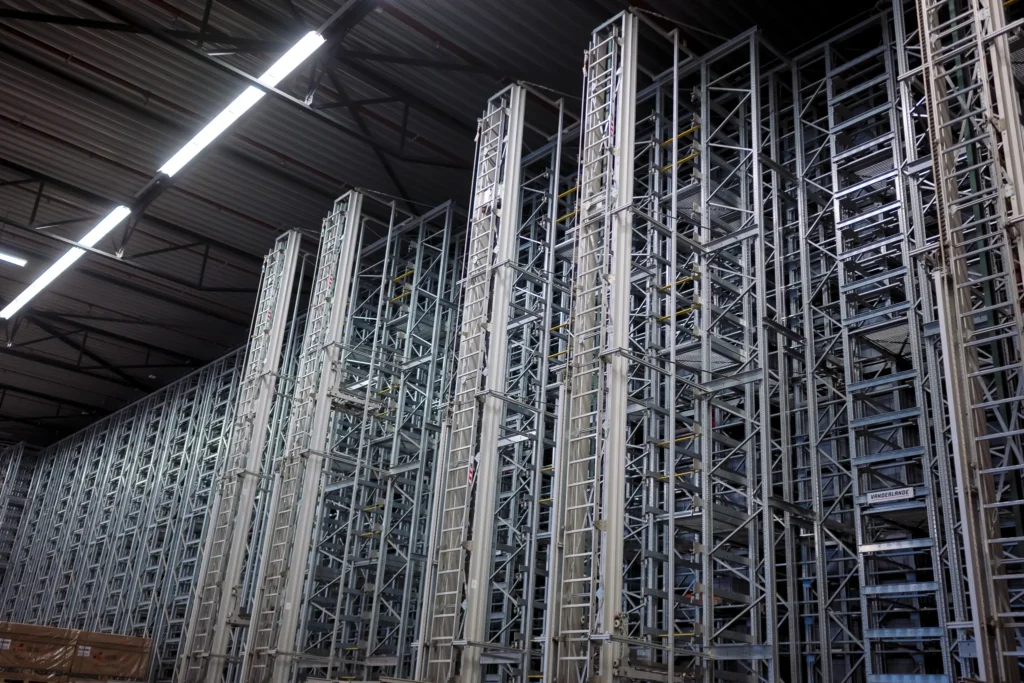
With the exponential growth of e-commerce worldwide, logistics companies are more crucial than ever to trade between continents. Van der Helm Logistics has closely followed these dynamics and plays an essential role in facilitating the smooth transit of goods both within Europe and beyond. Need for efficient logistics solutions The increase in online orders, especially from Chinese online shops, has led to an explosive growth in the number of packages shipped to Europe. As a result, the logistics sector is facing new challenges. Customs regulations are being tightened, and at the same time the demand for efficient and reliable transport solutions is increasing. Van der Helm Logistics anticipates these changes by continuously investing in technology and infrastructure to improve both the capacity and speed of the logistics chain. With an extensive network of partners and our own distribution centers, we are well positioned to adapt our clients’ needs to this dynamic market. Navigating new customs rules With the possible introduction of new European customs regulations, we are ready to support our customers in meeting all requirements. We understand that changing regulations can impact the cost and delivery speed of goods, which is why we offer proactive solutions. Our specialized customs services ensure that every package is processed correctly and efficiently, minimizing delays and additional costs. Innovation in freight transportation The increasing tightness in cargo capacity, especially during peak seasons, requires innovative approaches. Van der Helm Logistics continues to invest in multimodal transport solutions to relieve pressure on airports. By using alternative routes and transportation methods, such as rail and ocean freight, we ensure that our clients’ goods always arrive on time, even during times of air cargo capacity constraints. Forward-looking strategies for growing e-commerce The e-commerce revolution is far from over, and Van der Helm Logistics continues to adapt to the changing market. We continue to strive to optimize our supply chain services to meet growing demand while complying with the strictest European regulations. Our focus on customer-focused solutions and our commitment to remain at the forefront of logistics innovation make us the ideal partner for companies looking to take advantage of the growing e-commerce market, without the worry of logistics challenges and changing regulations. Together with our customers, we look forward to a future where efficiency and regulatory compliance go hand in hand, and where we continue to contribute to smooth global trade.