

Warehousing of chemicals: safe and reliable storage solutions
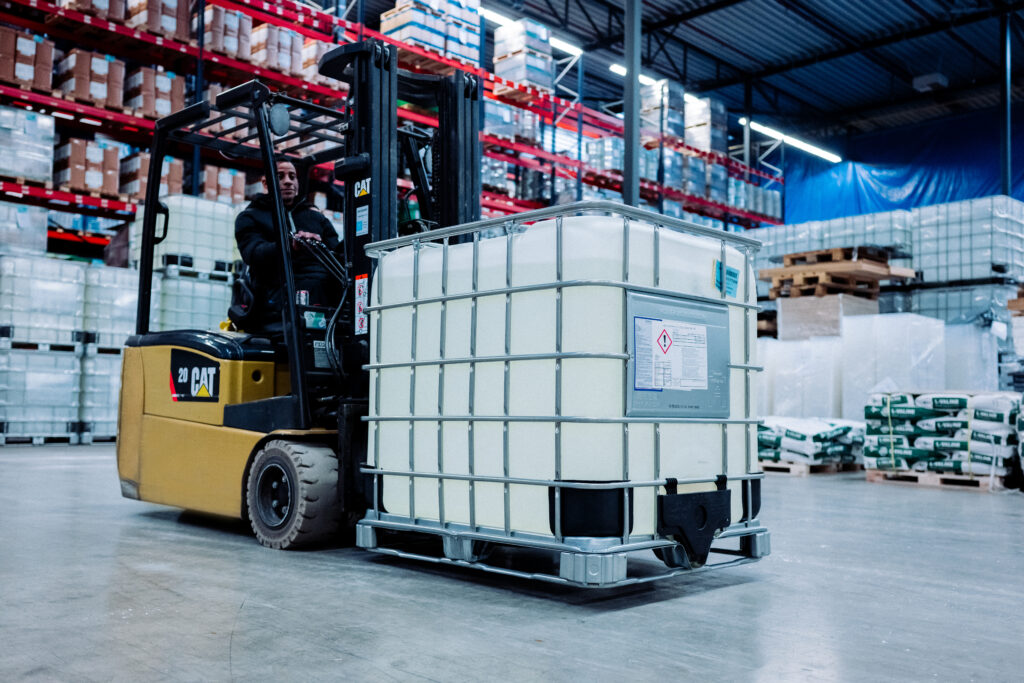
Looking for a partner for the storage and logistics of your chemicals? At Van der Helm Logistics, we understand how important safe storage and efficient management are for hazardous materials. While we don’t provide ADR storage ourselves, we work with specialized partners to ensure your chemicals meet the highest safety and environmental standards. Expertise in warehousing of chemicals At Van der Helm, we believe in customization and quality. Our expertise in warehousing provides a comprehensive solution for companies looking to store chemicals without compromising on safety or regulatory compliance. Data visibility and real-time reporting: Our advanced IT system provides 24/7 access to real-time information about your inventory, orders and logistics processes. This allows you to accurately monitor and optimize your supply chain. Integration with transport and customs: We offer seamless logistics solutions where transport, storage and customs formalities are perfectly integrated. This keeps your logistics process smooth and reliable. What can you expect when working with Van der Helm? Our warehousing and logistics services Although ADR storage is performed by our partners, Van der Helm offers comprehensive services to support your supply chain: Why choose Van der Helm? Frequently asked questions about chemical warehousing Does Van der Helm offer ADR storage? No, but we work with reliable partners who specialize in this. Can Van der Helm transport my chemicals? Yes, we offer transportation solutions and provide a seamless connection between storage and delivery. What value-added services does Van der Helm offer ? We offer services like packing, repacking, labeling and quality control to make your goods completely ready. Get in touch Want to learn more about our warehousing services for chemicals? Our team is ready to work with you to find the perfect solution. Contact us today and find out how Van der Helm can optimize your logistics processes.
Greater transparency in container logistics: better data exchange through Rotterdam terminals

New step in digitization of logistics chain Recently, deep-sea terminal Rotterdam World Gateway (RWG) started offering full insight into new data elements, giving shippers more control over container movements. This development follows a successful lobby for better data exchange and transparency within the logistics sector. APMT at Maasvlakte II and Hutchison Ports ECT Rotterdam are also expected to follow soon with a similar approach. Understanding container movements through Portbase With the integration of advanced terminal data, Portbase users now receive detailed and up-to-date information about their containers. This is accessible via a Cargo Controller account and can be integrated into existing systems both via an online user environment and via an API link. By incorporating real-time status and planning information directly into logistics processes, better coordination between carriers, terminals and hinterland connections is created. What data elements are available now? The information shared by RWG comes directly from the terminal’s scheduling system, ensuring reliability and timeliness. The data available include the ocean vessel’s expected time of arrival (ETA), the expected time of discharge (EDT), the ship’s expected time of departure (ETD) and the exact time the container leaves the terminal (Gate-out). Central availability of terminal information With RWG’s connection to Cargo Controller, all major deep-seater terminals in Rotterdam are now connected to this platform. In recent years, terminal data often became fragmented across different systems, making it difficult to understand container flows. Centralization via Cargo Controller now makes it possible to share this information with authorized parties in a secure and structured way. What does this mean for the logistics industry? This development represents a major step forward in the digitization and optimization of supply chain processes. Shippers benefit from better predictability and more efficient planning, while carriers and logistics service providers can switch faster and more accurately. At Van der Helm, we are actively committed to innovation and digitization within the logistics sector. Transparency and efficient data exchange play a crucial role in improving supply chains. Want to know how to make the best use of these new opportunities? Contact us for strategic advice.
European Commission wants higher threshold for CBAM: impact on importers

Proposed relaxation of CBAM rules The European Commission plans to significantly increase the threshold for the Carbon Border Adjustment Mechanism (CBAM). European Commissioner for Climate and Clean Growth Wopke Hoekstra announced that the Commission will soon present a proposal to increase the current limit of €150 per shipment. This would mean exempting about 80 percent of the companies currently covered by CBAM. Reduced administrative burden for small importers According to the European Commission, less than 20 percent of companies account for more than 95 percent of embedded emissions in CBAM goods. By raising the threshold, the scheme continues to target the largest emitters, while smaller importers experience less administrative burden. The Netherlands Emissions Authority (NEa) previously advocated raising the threshold. For importers who import only small quantities of CBAM goods, the administrative obligations are often disproportionately high. Moreover, these cases involve relatively low CO2 emissions, limiting the impact on climate goals. Implications and further decision-making Although the proposal has been positively received by companies and organizations such as the NEa, it is not yet final. Plans must be further developed and approved by member states before the new threshold actually comes into effect. The exact impact on importers will therefore depend on the final details of the scheme. What does this mean for importers and the logistics industry? At Van der Helm, we are closely following developments around CBAM. For companies trading internationally, it is essential to know how these changes can affect import procedures and costs. Through our expertise in customs matters and cross-border logistics, we help customers stay compliant and minimize administrative burdens. Want to know more about how these CBAM changes affect your import process? Contact us for tailored advice.
Germany extends border controls until Sept. 15: impact on goods transport

The German government has announced a six-month extension of current border controls through Sept. 15. Originally scheduled to expire March 15, German authorities consider it necessary to continue the controls. They apply to all German internal and land borders and aim to combat illegal migration and human smuggling, as well as protect internal security. What does this mean for freight transport? While border controls are primarily established to regulate migration and security, they can also impact the logistics industry. Additional controls can lead to longer truck wait times and supply chain disruptions. This can result in delivery delays, higher transportation costs and possible disruptions in just-in-time deliveries. Strict requirements within the Schengen Convention Within the Schengen area, internal border controls are not allowed. According to Article 25 of the Schengen Borders Code, member states may only institute temporary border controls if there is a serious threat to public policy or internal security. The European Commission closely monitors these measures and regularly evaluates whether the extension of such controls is justified. Dutch border controls also subject to review Not only Germany, but also the Netherlands introduced temporary border controls in December 2024. Asylum and Migration Minister Marjolein Faber said that the House will be informed about the evaluation of the first three months of these controls no later than March. What can you do in case of delays? For companies engaged in international transport, it is important to take into account possible waiting times at the border. Van der Helm closely monitors developments and helps customers with efficient solutions to minimize delays. If you are hindered by border controls and are looking for alternative logistics solutions, please contact us. We are happy to think along with you about the most efficient transport routes and help keep your supply chain running optimally.
European Parliament approves VAT reform: what does it mean for businesses?

The European Parliament has approved a sweeping VAT reform that will have a major impact on e-commerce platforms and cross-border trade within the EU. The new rules, effective from 2030, will make online platforms co-responsible for VAT payments and digitize VAT reporting. Platforms responsible for VAT payment Starting in 2030, online platforms will be required to pay VAT for services offered through them if individual service providers fail to do so. This should put an end to unfair competition, with traditional businesses paying VAT and some online sellers bypassing this obligation. Member states may choose to exempt small and medium-sized enterprises (SMEs). However, large e-commerce platforms will face new obligations to comply with VAT rules in all EU countries where they operate. Digital invoicing and tighter controls on cross-border trade VAT reporting for international transactions will be completely digitized. Businesses will have to send invoices online and automatically report VAT data to tax authorities from 2030. This will enable tax authorities to detect VAT fraud faster and more effectively. The existing One-Stop Shop (OSS) system, introduced in 2021 to simplify VAT processing within the EU, will be further expanded. This will allow more businesses to meet their VAT obligations through one portal and in one language. Less administrative burden, more VAT revenue According to the European Commission, this reform would allow member states to recover approximately €11 billion in missed VAT revenue annually. For businesses themselves, it would save €4.1 billion a year in compliance costs and reduce registration and administrative costs by €8.7 billion over 10 years. What does this mean for businesses? For companies conducting international business within the EU, VAT processing will become easier but also more strictly controlled. The digitization of invoicing and reporting means less paperwork, but also less room for error. E-commerce platforms must prepare for their new role as VAT responsible parties. This will require adjustments to their systems and potentially higher compliance costs. With the introduction of the VAT in the Digital Age (ViDA) package, the EU is taking an important step toward a more transparent and efficient VAT system. Van der Helm As your specialist in customs and VAT processing The upcoming changes make it even more important to have a reliable logistics and customs partner to fully support your VAT handling and compliance. Van der Helm Logistics specializes in customs matters and tax obligations for international trade, helping companies make a smooth transition to the new VAT rules. Want to know how these changes affect your business and how you can respond to them? Contact us for tailored advice.
From January 31 mandatory: Safety and Security Declaration for exports to UK

Effective January 31, 2025, it will be mandatory for all export cargo from the EU to the UK to submit a Safety and Security Declaration (S&S Declaration) prior to arrival at the UK port. With this, the UK government is taking another step in implementing the Border Operating Target Model. What does this mean for your export shipments? The S&S Declaration, also known as Entry Summary Declaration (ENS), must be submitted no later than two hours prior to arrival at the UK port. This is the responsibility of the UK importer, an intermediary or the transport company. However, the carrier always remains responsible for proper submission. For short-sea traffic, the shipping company or ship’s agent is responsible for the timely and correct declaration. In RoRo traffic, this responsibility lies with: Some ferry operators, such as DFDS and Stena Line, offer the option of providing this declaration on behalf of the inland operator. However, CLdN requires the inland operator to submit the declaration through their platform. Important points of interest for exporters Prepare now Although the change doesn’t take effect until Jan. 31, it’s crucial to engage with your logistics partner now. Van der Helm is ready to support you in a smooth transition. Want to know how this obligation will affect your shipments and what steps you can take now? Contact us and we will help you further.
Houthi Rebels Limit Attacks on Maritime Traffic
The Houthi rebels have announced they will restrict their attacks on maritime traffic to vessels fully owned by Israeli companies or sailing under Israeli flag. This was confirmed in a statement from the rebels’ Humanitarian Operations Coordination Center (HOCC). Risk Now Limited to Fully Israeli Vessels In earlier attacks, during the initial phase of the Red Sea crisis, the Houthis targeted more broadly, affecting ships without clear Israeli connections. However, in their recent statement, the Houthis emphasize that foreign vessels, as well as vessels only partially owned by Israeli entities, are no longer targets. Exception for American and British Vessels The Houthis also indicate that ships from the United States and Great Britain, which were explicitly targeted last year, will now be spared. However, the movement warns that any new military actions from these countries could lead to renewed focus on their shipping. Restrictions Remain for Israeli Vessels Ships under Israeli flag and fully Israeli-owned properties remain prohibited from sailing in the Red Sea, the Gulf of Aden, and parts of the Indian Ocean. According to the Houthis, this restriction will be lifted once all phases of the ceasefire between Israel and Hamas are successfully completed. Cautious Return to the Suez Canal Route Despite the recently announced changes, shipping companies remain cautious about resuming routes via the Suez Canal. CMA CGM, which operated some vessels during the crisis, is again one of the few shipping companies choosing this route. The vessel ‘CMA CGM Columba’ is currently sailing via the Suez Canal to the next port of call in the United Arab Emirates. Situation Regarding the ‘Galaxy Leader’ The Japanese cargo ship ‘Galaxy Leader’, which was attacked and detained by the Houthis in November 2023, remains seized in Yemen. The crew of 25 people is still being held. It is reportedly awaiting green light from Palestinian leaders for their release. Van der Helm Logistics closely monitors developments to support clients with safe and efficient logistics solutions, regardless of geopolitical challenges. Please get in contact for more information about secure logistics routes.
Delays on routes from Asia to Europe

We are currently identifying delays on shipping routes from Asia to Europe. These disruptions are caused by a combination of factors putting pressure on the ocean freight market. Main causes of delays: Implications for the logistics chain This combination of factors – holidays, blank sailings, port congestion and weather conditions – leads to significant disruptions in the logistics chain and longer shipping times. The complexity of the current situation requires flexibility and good planning. At Van der Helm Logistics, we stay on top of developments and do everything we can to minimize the impact on your supply chain. Our experts are ready to think with you and provide alternative solutions so that your goods reach their destination safely and on time. Do you have questions or want more information? Please contact us. We’d love to help you out!
Container alliances and changes in liner networks for 2025
In the dynamic world of ocean freight, shippers face crucial choices looking ahead to 2025. The container alliances will be thoroughly revised next year, bringing new opportunities and challenges. At Van der Helm Logistics, we are closely following these developments so that we can advise and support our customers in the best possible way. What is changing in container alliances? As of February 2025, existing collaborations in liner shipping will be completely revised: These changes have a direct impact on ports, shippers and logistics chains. Flexibility and strategic planning are essential to take full advantage of these changes. The winners: which ports benefit? Changes in container alliances are creating new opportunities for some ports to strengthen their position in global logistics: The losers: who is losing ground? The review of networks not only has winners, but also brings challenges and loss of interest for some ports: What does this mean for Rotterdam? Rotterdam remains a stable player in liner shipping and is becoming an important hub within the Gemini network. This presents opportunities for growth in container movements at the Maasvlakte. Yet the hub-and-spoke model also brings challenges. Experts say it is complex to achieve consistently high performance at both hub and peripheral ports. This requires close cooperation and flexible logistics solutions. Advice for 2025: How can you prepare? At Van der Helm Logistics, we believe in proactive planning and strong supply chain partnerships. With the right approach, you can take advantage of changes in container alliances. Here are our recommendations: With our extensive experience and customer-focused approach, we help you optimize your logistics processes, even in a changing ocean freight landscape. Want to know more? Want to know how we can support your supply chain in 2025? Contact Van der Helm Logistics and discover our solutions for an efficient and future-proof supply chain.
CLA conflict at ECT: New actions threaten on the horizon

The recent work stoppages at Europe Container Terminals (ECT) have put the collective bargaining conflict between workers and the company on edge. Although the initial actions are behind us, new disruptions in operations seem only a matter of time. ECT, however, calls the workers’ and unions’ demands “unrealistic” and stresses that continuity is paramount. About ECT and the collective bargaining process Europe Container Terminals (ECT) is one of the largest container handling companies in Europe and plays a crucial role in the logistics chain of the Port of Rotterdam. The current collective bargaining has arisen because employees want certainty about their terms of employment and compensation, while ECT is focused on financial stability and sustainable employability of staff. These divergent interests have led to an impasse. Negotiations remain unsuccessful After months of negotiations, the unions and ECT have not reached a breakthrough. The unions’ ultimatum to meet the collective bargaining demands has allowed the company to expire without a substantive response. In a letter to the unions, ECT says it is open to “realistic discussions about a new collective bargaining agreement,” but they say the current demands are not feasible. Actions provoke division Initial actions, including a temporary work stoppage, have resulted in solid divisions. While the unions are pushing for more security for staff – such as job guarantees in the case of collegiate exchanges – ECT is emphasizing the sustainable employability of employees and the long-term continuity of the organization. The unions have requested that the ultimatum be withdrawn so that new talks can take place. However, ECT maintains their position that the actions are “unnecessary” and counterproductive. Key points of the conflict Future actions The likelihood of new work stoppages, or even full strikes, is increasing. The unions have made it clear that further escalation is not ruled out if ECT does not meet the workers’ demands. However, ECT maintains their view that a balanced collective agreement is only possible with realistic agreements. At Van der Helm Logistics, we follow these developments closely. As a logistics partner, we understand the impact of such disruptions on the supply chain and are ready to support our customers in mitigating any consequences.