

EUDR: are you prepared for December 30, 2026?
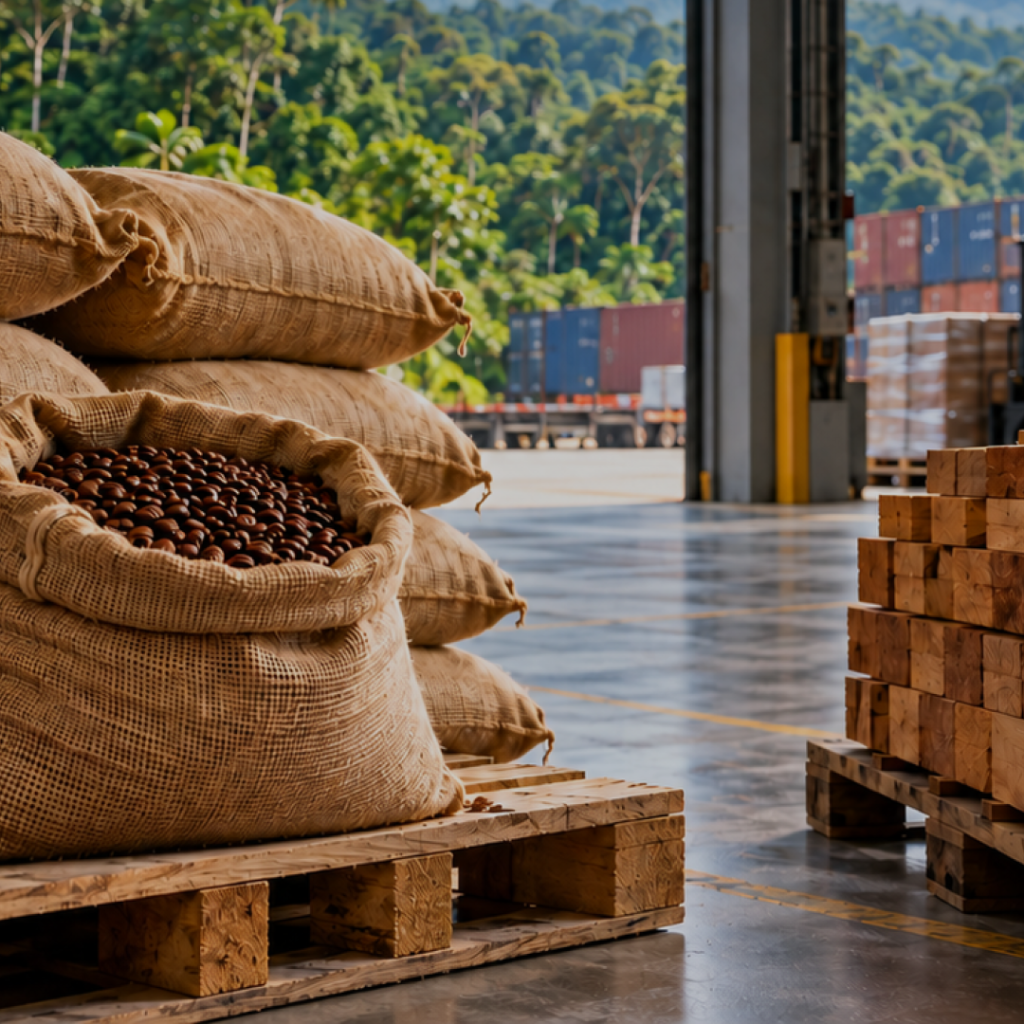
The European Union Deforestation Regulation is approaching From December 30, 2026, the European Union Deforestation Regulation (EUDR) will become applicable. This regulation can have significant consequences for your import and export processes. Do you produce, import, or export products that fall under the EUDR? Then you must be able to demonstrate that these products: The NVWA advises companies to start preparing. Therefore, do not wait until the end of the year, but check in a timely manner whether your products, suppliers, and supply chain are ready for the new obligations. What is the EUDR? The goal of the EUDR is to ensure that certain commodities and products placed on the European market or exported from the EU are deforestation-free and legally produced. The EUDR applies to the following commodities: In addition, various derived products also fall within the regulation, such as certain chocolate products, leather goods, tires, furniture, and paper products. Whether a product falls under the EUDR is determined based on the products listed in Annex I of the EUDR. Correct product classification is essential Whether a product actually falls under the EUDR depends not only on the HS/CN code but also on the specific description included with the code in Annex I. Several commodity codes include the designation ‘ex’. This means that not all goods within that code automatically fall under the EUDR, but only those products that meet the specific description. An incorrect classification can therefore lead to a wrong assessment of your EUDR obligations. Are you unsure about the classification of your products? Our customs specialists can support you with this. What does the EUDR mean for your organization? When you place products under the EUDR on the European market or export them, you must apply a due diligence system. This consists of four steps: 1. Collect information Collect information about the product, its origin, and the supply chain. 2. Assess risks Assess whether there is a risk that the product does not comply with the EUDR. 3. Mitigate risks Are there risks? Then appropriate measures must be taken to reduce them to a negligible level. 4. Record due diligence documentation The due diligence documentation must be recorded and kept for at least five years. What information do you need? This includes, among other things: It is therefore important to start discussions with suppliers now and determine whether they can provide this information in a timely manner. The Due Diligence Statement (DDS) Once the required due diligence has been carried out, a Due Diligence Statement (DDS) must be submitted to the European EUDR Information System (TRACES). After submission, you will receive a DDS reference number. For imports, this reference number must be available before the import declaration is submitted, as the number must be stated in the customs declaration. Our advice: do not wait until your goods arrive. Ensure that the necessary information is available well before the arrival of the goods. Are important data or supporting documents missing? Then the DDS may not be submitted in time. This can have direct consequences for your customs process. If the required information cannot be obtained, the product may not be placed on the EU market or exported from the EU according to the EUDR. Your responsibility The responsibility for compliance with the EUDR always remains with the operator or trader responsible for the goods in question. This means that your organization remains responsible for: The NVWA can carry out checks on importers, exporters, producers, and traders. The relevant documentation must be kept for at least five years. Van der Helm as EUDR Authorized Representative Do you want support in submitting the DDS? Van der Helm Customs Services can act as an EUDR Authorized Representative and submit the DDS to the EUDR Information System (TRACES) on behalf of your organization. The EUDR makes it possible to appoint an authorized representative for submitting the DDS. However, your organization remains responsible for compliance with the EUDR. When Van der Helm provides this service, we receive all necessary product, production, chain, and geolocation data from your organization in a timely manner. Additional contractual agreements are made in advance for this service. What can you do now? Prepare in time The EUDR requires more than just submitting a statement. Correct product classification, reliable supplier information, traceability, and a well-established due diligence process are essential to be compliant. Do you have questions about the EUDR, are you unsure if your products fall under the regulation, or do you want to know how Van der Helm can support you? Then contact your regular contact person or one of our Customs Specialists.
New Union Customs Code (nUCC): What does this mean for your organization?
European customs legislation is on the verge of a major transformation. With the new Union Customs Code (nUCC), the European customs system will be reformed step-by-step over the coming years. The core of this change: customs supervision is increasingly shifting from individual declarations to reliable, up-to-date, and structured data regarding products, trade flows, and supply chains. According to the Dutch Customs, this is the largest reform of the European customs system since the establishment of the Customs Union in 1968. The reform introduces, among other things, a European Customs Data Hub, a new EU Customs Authority, and new opportunities for trusted traders. Implementation will take place in phases and will continue until 2034. For importers and other companies engaged in international trade, this means that data quality is becoming an increasingly important factor within the customs process. It is therefore wise not to wait until all components of the nUCC become mandatory, but to start looking now at the quality and availability of product, supplier, and customs data within your organization. From declaration-driven to data-driven customs supervision Today, a large part of the customs process still revolves around individual declarations. For every movement of goods, information is collected, submitted, and processed within various national customs systems. The nUCC fundamentally changes that model. Central to the future system is the EU Customs Data Hub: a single European digital environment where companies can submit customs and product information. The goal is that information eventually does not have to be resubmitted for every individual shipment and that customs authorities in the various EU member states can work with the same data. Furthermore, the Data Hub should give European customs authorities access to more up-to-date and better-integrated information on trade flows and supply chains. This allows risk management to take place increasingly at the European level and enables authorities to determine more specifically which goods or trade flows require extra attention. For your organization, this simultaneously means that the quality of the underlying data becomes more important. A correct commodity code remains necessary, but it is increasingly becoming just one part of a broader set of information about the product, the parties involved, and the supply chain. The importer’s responsibility becomes more significant Another important development within the new customs system is the position of the importer. Upon import, it must be clear which party is responsible for the goods. Under the new system, that responsibility explicitly covers both fiscal and non-fiscal obligations. Non-fiscal requirements include, for example, European rules regarding product safety and other product-related legislation. This does not mean that the same information is required for every product. Which data and documents are relevant depends on the product, its origin, your trade structure, and the applicable legislation. In practice, we therefore expect that you will need to have increasingly better insight into data such as product descriptions, HS classifications, origin, manufacturers and suppliers, and relevant product documentation. Depending on the product, data regarding CE marking, batteries, product safety, or other market surveillance requirements may also be important. As a result, product data is increasingly becoming more than just a topic for the customs department. Information from procurement, product management, compliance, IT, and supply chain management may also be necessary to move your goods efficiently through the customs process. The EU Customs Data Hub will be introduced in phases The transition to the new system will not happen all at once. For e-commerce, a significant part of the change will take place first. According to the current planning, the EU Customs Data Hub will be mandatory for e-commerce from July 1, 2028. From March 1, 2031, the Data Hub will be opened for voluntary use by other companies. Subsequently, its use will become mandatory from March 1, 2034, for all traders covered by the new system. The years leading up to 2034 are therefore not a period in which you need to do nothing. The technical infrastructure, European implementation rules, national legislation, and business processes are being adapted step-by-step. Does your organization have large import volumes or complex international supply chains? Then it is wise to assess well before the final deadlines whether the necessary data within your organization is available, reliable, and structured. Changes have already begun for e-commerce Do you sell goods from countries outside the EU directly to consumers within the European Union? Then parts of the reform are already concretely relevant now. Since July 1, 2026, a temporary import tariff of €3 per item has applied to certain e-commerce goods as a result of the amendment to the previous exemption from import duties. Additionally, from November 1, 2026, product identification will be mandatory in the import declaration for e-commerce. Product identification goes further than a general product description. It concerns a unique code with which a specific model, a specific batch, or a specific product can be recognized and tracked. According to Customs, this identification can be assigned by, among others, the manufacturer, producer, supplier, online seller, marketplace, or the online platform. In addition, a European handling fee for e-commerce is planned. At the time of publication, the Dutch Customs expects implementation around November 1, 2026, but the exact amount of this fee is not yet definitively known. For e-commerce companies, these developments make it clear how quickly the role of product data is changing. Information that you previously used primarily in your webshop, ERP system, or supplier documentation can increasingly become directly relevant to the customs process. More data also means more attention to data quality The development towards a single European Data Hub offers advantages. Ultimately, you should be able to submit information once and reuse data for multiple movements of goods. This should reduce administrative burdens and make processes more efficient. But there is an important condition attached: the data provided must be correct and reliable. Is information about, for example, classification, origin, suppliers, or product characteristics scattered across different systems or maintained manually? Then it may become more difficult to consistently provide the same
Import Change: Product Identifiers (PIDs)
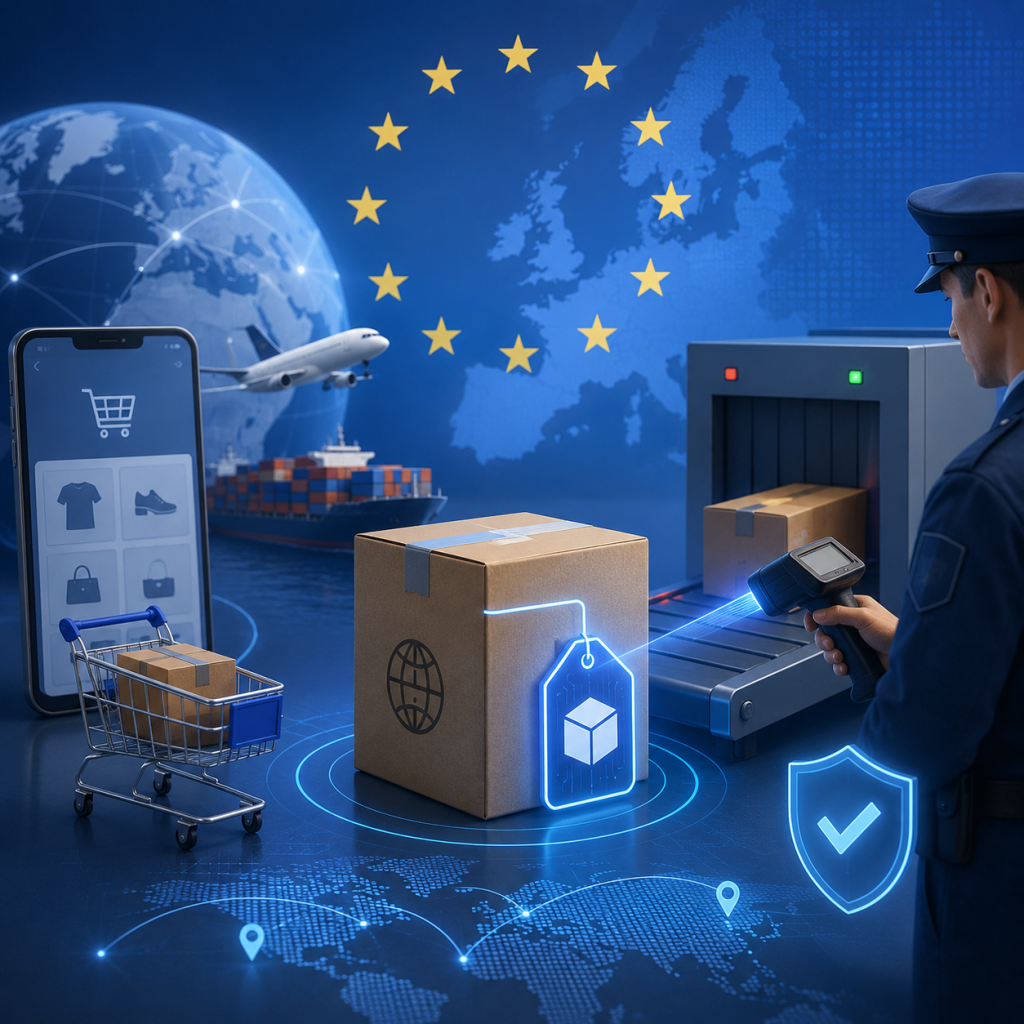
Do you sell products directly to consumers within the European Union via a webshop, online marketplace, or another e-commerce channel? If so, you may face new obligations for your customs declarations. The European Union is introducing new requirements for Product Identifiers (PIDs) for e-commerce shipments. These are part of broader customs reforms and are intended to improve product traceability and strengthen customs supervision. From November 1, 2026, providing PID information will become mandatory for the relevant e-commerce shipments. Missing or incorrect PID data can lead to customs delays, requests for additional information, or rejection of the customs declaration. To help you prepare for these changes, we explain in this update what Product Identifiers are, which companies the new obligations apply to, and what product information may need to be provided to enable a correct customs declaration. July 2026 – Voluntary PID reporting started The voluntary phase started on July 1, 2026. From that moment on, companies can include PID information in their customs declarations. During this transition period, customs authorities will not impose sanctions if PID data is missing or incorrect. November 2026 – PID reporting becomes mandatory From November 1, 2026, providing PID information will be mandatory for the import flows involved. From that point on, customs can enforce the new requirements and reject, check, or further investigate customs declarations if the required PID information is missing or incorrect. In addition, new document codes for PIDs will be introduced. These codes must be included in the customs declaration from November 1, 2026. Which companies do these new requirements apply to? The changes are particularly relevant for companies involved in distance sales. This occurs when goods from outside the European Union are sold directly to customers in the EU and the seller is involved in organizing or facilitating the transport. This concerns, for example, sales via: What is a PID? A Product Identifier (PID) is a product reference that allows customs to uniquely identify a product. The PID ensures that the correct product information is declared and supports the traceability of products within the supply chain. When does a PID meet the requirements? A PID must uniquely identify one specific product variant. When a product differs in, for example, size, color, model, packaging configuration, or another relevant characteristic, a separate PID must in principle be used. A valid PID: What types of PIDs can be used? The EU recognizes several types of Product Identifiers: 1. Merchant Product Identifier (M-PID) A product identification assigned by the seller, marketplace, or platform on which the product is offered. This identification must uniquely identify the product within the relevant sales channel. 2. Non-Standardised Manufacturer Product Identifier (NS-PID) A product reference assigned by the manufacturer, such as a model number, part number, or internal product code. This identification is unique within the manufacturer’s own system. 3. Standardised Manufacturer Product Identifier (S-PID) An internationally recognized product identification, such as an EAN, GTIN, or ISBN code. These identifications follow international standards and are widely recognized by retailers, marketplaces, and customs authorities. The PID used in the customs declaration must uniquely identify the imported product and be used consistently in both sales platforms and customs documentation. The overview below shows which additional data is required as a result of the PID obligations, so that the customs department of Van der Helm can correctly prepare the customs declaration. Praktijkvoorbeeld PID-rapportage voor een B2C-zending De gemarkeerde velden zijn de nieuwe productidentificaties die voor de betreffende e-commercezendingen moeten worden aangeleverd. ! Verplicht vanaf 1 november 2026 Voorbeeld van de vereiste productgegevens Nieuwe PID-vereisten Voorbeeld van PID-rapportage voor een B2C-zending Basisgegevens Nieuwe vereisten: Product Identifiers Aantal en waarde Productomschrijving HS-code Land van oorsprong M-PIDMerchant Product ID NS-PIDNiet-gestandaardiseerde fabrikant-ID S-PIDGestandaardiseerde fabrikant-ID Aantal Waarde per eenheid Totale waarde Totale waarde € 140,00 1 M-PID Product-ID van de verkoper, marktplaats of het verkoopplatform. 2 NS-PID Modelnummer, onderdeelnummer of interne productcode van de fabrikant. 3 S-PID Gestandaardiseerde identificatie zoals EAN, GTIN of ISBN. Gebruik de passende documentcode wanneer deze ontbreekt. Voorbereiden op de verplichting Zorg dat deze productgegevens tijdig beschikbaar zijn ✓EAN, GTIN, ISBN, SKU of modelnummer ✓Duidelijke productomschrijving ✓Land van oorsprong ✓Juiste GS-/HS-code ✓Productwaarde en hoeveelheid ✓Verkoper of verkoopplatform Illustratief voorbeeld. Controleer per invoerstroom welke velden en documentcodes van toepassing zijn. Bedragen exclusief eventuele invoerrechten en belastingen. What should you do now? From November 1, 2026, providing PID information will be mandatory for the relevant import flows. It is therefore important to check in a timely manner whether the necessary product information is available and can be provided consistently. It is advisable to check your product data and ensure that you can provide the following information: • Product identifications (EAN, GTIN, ISBN, SKU, or model number);• A clear product description;• The country of origin;• The correct commodity code (GS/HS code);• The product value;• If applicable, the identification of the seller or the sales platform. Companies selling via webshops, marketplaces, or other e-commerce platforms must also ensure that the product identifications used can be uniquely linked to the products included in the customs declaration. The declarant can only include PID information based on the data provided by the importer, seller, or sales platform. It is therefore important that the required product information is available on time and is provided in a correct and consistent manner. Preparing for the new PID obligations with Van der Helm As a customer, you remain responsible for providing the required product information, including correct PID data. Do you have questions about the new PID obligations or would you like support in preparing for these changes? Then please contact one of our consultants.
New European packaging rules (PPWR): what does this mean for you in practice?

As of August 12, 2026, an EU Declaration of Conformity (DoC) must be available for every packaging type placed on the EU market, supported by technical documentation. If this documentation is missing, it can lead to enforcement measures by market supervisors, including sales bans, withdrawal from the market, and administrative sanctions. Operational disruptions in the supply chain may also occur. Regulation (EU) 2025/40 on packaging and packaging waste (the PPWR) entered into force on February 11, 2025, and will apply from August 12, 2026, with some requirements being phased in until 2030. If your company places packaged goods on the EU market, your packaging must comply with the PPWR, even when packaging or logistics activities are outsourced. You are responsible for ensuring your packaging complies with the PPWR. Roles and responsibilities One company can have multiple roles, and each role brings its own obligations: Documentation and compliance from 2026 From August 12, 2026, all packaging placed on the EU market must be supported by a Declaration of Conformity. In this Declaration of Conformity, the packaging is described and assessed using supporting technical documentation. In principle, one declaration is required per type of packaging. Similar packaging, such as different sizes using the same materials, can be grouped together as long as this does not affect conformity. Companies must also ensure that packaging continues to comply with the rules and update documentation when changes occur. Transport packaging Transport packaging falls fully under the PPWR. This includes pallets, pallet collars, film, strapping materials, and e-commerce packaging. In principle, transport packaging falls entirely under the PPWR and must also meet the relevant requirements. Depending on the type of packaging, specific obligations and exceptions may apply. A Declaration of Conformity must be available for every packaging type. Similar packaging can be grouped within a single conformity assessment under certain conditions, provided that conformity is not affected. Transitional rules Packaging lawfully placed on the EU market before August 12, 2026, may remain in use without being recalled or modified. For reusable packaging, an earlier deadline applies, namely February 11, 2025. What should you do now? To be well-prepared for the PPWR, timely action is important. We advise you to: Impact on your organization The PPWR affects logistical and operational processes. Packaging requirements regarding documentation, traceability, and reporting are increasing. In the future, regulations will become even stricter, requiring packaging volume and empty space to be reduced as well. Legal responsibility for compliance with these regulations remains with the customer. Van der Helm can provide support in optimizing packaging processes. Timely preparation is essential to comply with the regulations and prevent business disruptions.
Van der Helm Logistics invests in the future with a new 100,000 m² distribution center in Moerdijk

DEN HOORN, June 23, 2026 – Van der Helm Logistics is taking a major step in its further growth and development with the realization of a new distribution center of approximately 100,000 m² at Logistiek Park Moerdijk. With this investment, the family business creates room for further growth, scalability, and innovation, while simultaneously laying the foundation for the logistics services of the future. The new distribution center enables the consolidation of warehouse activities from Den Hoorn and part of Moerdijk at one central location. This creates space for further growth, innovation, and scalability. While warehouse activities are consolidated in Moerdijk, ocean freight, air freight, and customs activities will remain based in Den Hoorn. The warehouse and office in Hoofddorp will also remain operational. “The logistics market is changing rapidly. Customers demand scalability, flexibility, digital integrations, and security in their supply chain,” says Gerard van der Helm. “With this investment, we are not only creating extra capacity but also building a logistics platform that will allow us to support our customers for decades to come.” The choice for Moerdijk aligns with the strategic location, offering direct connections to the most important logistics corridors in the Netherlands and Europe. Additionally, the region provides access to a strong labor market and excellent multimodal connections via road, water, and rail. The distribution center is being developed according to the latest standards in logistics, safety, and sustainability. The warehouse will have a clear height of 15.4 meters, feature 104 loading docks, and be built to BREEAM Excellent standards. Furthermore, the building will be prepared for further automation, AI applications, energy-efficient installations, charging infrastructure, and large-scale use of solar energy. The warehouse will also be equipped according to high TAPA-A security standards. Moving warehouse activities to Moerdijk frees up extra space in Den Hoorn. This space offers opportunities for the further development of Trofipack and other future activities at the location.The location also offers significant advantages in terms of staffing. Thanks to the proximity of housing locations, Van der Helm has extra flexibility to handle peaks in personnel demand and ensure operational continuity. “This development goes beyond extra square meters,” Van der Helm continues. “We are investing in a future-proof logistics environment where technology, capacity, sustainability, and service come together. This strengthens our position as a logistics partner for customers both domestically and abroad.” Completion of the distribution center is scheduled for late 2026. The relocation of existing warehouse activities will take place in phases to ensure the continuity of service for customers. This development marks a special milestone for Van der Helm Logistics, which will also celebrate its 90th anniversary in 2026. The investment underscores the family business’s confidence in the future of the logistics sector and its ambition to continue growing as a strategic logistics partner. About Van der Helm Logistics Van der Helm Logistics is a family business with a history dating back to 1936. From locations in Den Hoorn, Hoofddorp, and Moerdijk, the company offers integrated logistics solutions in warehousing, transport, forwarding, customs, and fulfillment. With a strong focus on innovation, customer orientation, and long-term partnerships, Van der Helm supports customers worldwide.
No national handling fee for e-commerce shipments in the Netherlands

The Netherlands will not introduce a national handling fee for e-commerce shipments. The State Secretary for Finance announced this on Friday, June 12, 2026. This means there will be no additional national levy for the time being, on top of the European measures taking effect from July 1, 2026. At the end of 2025, there was still talk of a possible national levy for e-commerce shipments. Other European countries, including France and Belgium, also considered similar measures. The logistics sector criticized the short implementation period and the risk of disrupting the level playing field within the European Union. For companies that process many e-commerce shipments or ship to EU consumers, the decision provides more clarity. The Netherlands is now waiting for the broader European approach regarding the abolition of the so-called de minimis exemption. What will change as of July 1, 2026? Although the Netherlands is not introducing a national handling fee, things will certainly change for e-commerce shipments from outside the European Union starting July 1, 2026. From that date, the de minimis exemption will be abolished. This exemption made it possible to bring shipments with a value of up to €150 into the EU under certain conditions without import duties. With the expiration of this exemption, e-commerce shipments up to €150 will face a standard fee of €3 per declaration line. This means that costs per package will not always be the same. If a shipment consists of multiple declaration lines or product categories, the total fee per shipment can increase. For companies with high volumes, this can have a noticeable impact on total import costs. How is the €3 fee settled? The €3 per declaration line is not collected via the webshop. This is an important difference compared to, for example, IOSS declarations, where VAT payment can be handled through the sales environment. The fee is collected by the service provider at the time of customs clearance. In practice, this means that costs are settled as “cash against documents.” This is done via a deposit with the service provider, based on the number of declaration lines processed per month. It is therefore important for companies to have a clear understanding of the number of declaration lines they process monthly. Not only the number of packages counts, but also the structure of the shipments and the way products are declared. European handling fee expected from November 2026 In addition to the €3 fee per declaration line, a European handling fee is also expected starting November 1, 2026. This will likely be around €2 per shipment. The goal of this European approach is to have more e-commerce shipments transported to Europe together by container. This should make it easier for Customs to monitor the significantly grown flow of goods consisting of small packages from countries outside the EU. The growth of international e-commerce has led to a significant increase in the number of individual shipments in recent years. For customs authorities, this brings extra pressure regarding inspection, processing, and enforcement. By allowing shipments to enter Europe in a more bundled manner, this process should become more manageable. What does this mean for e-commerce companies? For e-commerce companies, fulfillment providers, and importers, it is important to prepare for the new situation. Even without a national handling fee, the costs and processes surrounding import shipments will change as of July 1, 2026. Especially for low order values, a fixed fee per declaration line can weigh relatively heavily. An additional cost of €3 or more per shipment can influence pricing, profitability, and the choice of certain logistics routes. More focus on bundling and correct declaration The new rules make correct customs data even more important. Think of accurate goods descriptions, HS codes, values, origin, and the number of declaration lines per shipment. Errors or ambiguities can lead to delays, extra costs, or additional inspections. In addition, it becomes more relevant for companies to look at the way goods enter Europe. Individual package flows from countries outside the EU may become more expensive and administratively burdensome due to the new levies. Bundled import flows can, in some cases, offer more oversight and efficiency. Preparing for July 1, 2026 The most important conclusion is that the Netherlands will not introduce an additional national handling fee for e-commerce shipments. This removes some of the uncertainty. At the same time, the European change as of July 1, 2026, remains in place. From that moment, a standard fee of €3 per declaration line applies to e-commerce shipments up to €150. A European handling fee of approximately €2 is expected to follow from November 1, 2026. For companies dependent on international e-commerce shipments, now is the time to review processes, volumes, and cost structures. By gaining insight into declaration lines, product data, and import flows now, you can avoid surprises when the new rules take effect.
December logistics update — Navigating holiday demand and upcoming EU changes
Dear partner, The coming months bring important changes for international supply chains, all while the December peak season is in full swing. As holiday demand pushing logistics networks to their limits, it’s more important than ever to stay ahead of regulatory shifts. In this update, we explain what the EUDR will mean for your sourcing, we outline France’s decision to end limited fiscal representation under Regime 42, and share how our customs team is preparing for the future. The EU Deforestation Regulation (EUDR) will take effect on 30 December 2025 We would like to inform you about new EU legislation that will affect the import and export of certain commodities: the EU Deforestation Regulation (EUDR – Regulation (EU) 2023/1115).The EU Deforestation Regulation (EUDR) will take effect on 30 December 2025, introducing strict requirements to ensure that key commodities and products are proven deforestation-free. Larger companies must comply from day one, while smaller businesses may receive extended timelines. In our blog, we break down what this means for your sourcing and supply chain. Curious how to prepare in time? Learn more about EUDR Regime 42 for non-EU companies From 1 January 2026, France will abolish limited fiscal representation under Regime 42 for non-EU companies, eliminating the option to defer import VAT. This change may increase administrative requirements and affect cash flow for businesses importing into France. The Netherlands will continue to offer this arrangement, providing a more favourable alternative for VAT handling. Companies relying on Regime 42 should review their EU entry strategy and prepare for the shift. Get in touch with your account manager Team update On 11 November, our customs team completed an export training, ensuring we stay fully up to date and future-ready. Fulfillment Centres in E-Commerce Logistics A fulfillment center is a specialized facility that stores your inventory, and from there handles the full order flow: receiving, picking, packing, shipping, and even returns. In our blog we explain how such a centre simplifies logistics and lets you focus on growing your business instead of managing warehousing. Curious what that means for your operations and scalability? Learn more about E-commerce logistics Happy Holidays from Van der Helm We also want to wish everyone a warm and joyful holiday season, while we work hard this month to ensure all logistics run smoothly and every delivery arrives on time.
CBAM Obligations from January 1, 2026

The final phase of the Carbon Border Adjustment Mechanism (CBAM) will come into effect as of January 1st, 2026. This means that importers of CBAM goods (iron, steel, aluminium, cement, fertiliser, electricity and hydrogen) within the EU, will be forced to deal with new reporting and payment obligations. As your direct representative, Van der Helm would like to inform you in a timely manner about what will change and what you need to prepare for. This will ensure that your shipments will not come to a standstill at the border on 1 January.
European Parliament Approves CBAM Simplifications

On September 10, 2025, the European Parliament approved a simplification of the CBAM (Carbon Border Adjustment Mechanism) regulation. This mechanism requires importers to pay a levy from January 1, 2026, to compensate for CO2 emissions released during the production of iron, steel, aluminum, and cement, among others. The approval of the new rules includes several important changes: The simplification aims to improve CBAM’s feasibility without compromising its objective: creating a level playing field between European and non-European producers regarding CO2 costs. Now that the European Parliament has approved, only the Council of the European Union (with representatives from member states) needs to agree. This decision is expected later this month. At Van der Helm, we closely monitor these developments. This way, you’re always informed about changes affecting your import flows, and we ensure your logistics remain compliant with European regulations.
Inland Shipping under Pressure Due to Congestion in Rotterdam and Antwerp: Impact Felt throughout the Entire Logistics Chain

Inland shipping is experiencing significant delays in the ports of Rotterdam and Antwerp. This is partly due to congestion in deep-sea shipping, causing inland vessels to sometimes wait for days before they can be loaded. Average waiting times are reaching up to 64 hours in Rotterdam and even 78 hours in Antwerp. The financial impact is substantial. WEC Lines, a Dutch shipping company, indicates that the current situation is costing the company over six hundred thousand euros per month. Other carriers, such as Contargo and Inland Terminals Group, also report that the waiting times result in less available capacity and higher costs in the chain. The delays have multiple causes: irregular arrivals since the COVID-19 pandemic, rerouting due to Houthi attacks in the Red Sea, deployment of larger ships, low water levels on the Rhine, and changed collaborations between major shipping companies like Maersk and MSC. Additionally, according to shippers’ organization Evofenedex, there is “unfair priority” given to seagoing vessels, which they claim hinders sustainable goods flow. The port authorities of Rotterdam and Antwerp acknowledge the issues and emphasize that other Western European ports are experiencing similar congestion. According to them, there has been insufficient investment in infrastructure and capacity, further increasing pressure on inland shipping. At Van der Helm, we are closely monitoring these developments. The reliability and flow in the chain are under pressure, affecting everyone in logistics. Clear communication, smart planning, and flexibility are more important than ever in this situation. Want to know more about how we safely and efficiently organize your container flows?Check out our services in container transport.